Showing posts with label surfing. Show all posts

Friday, April 22, 2022

An Ode to Praia dos Supertubos

Happy Earth Day!

The ocean gives us everything. May we strive to be better stewards than we were last year.


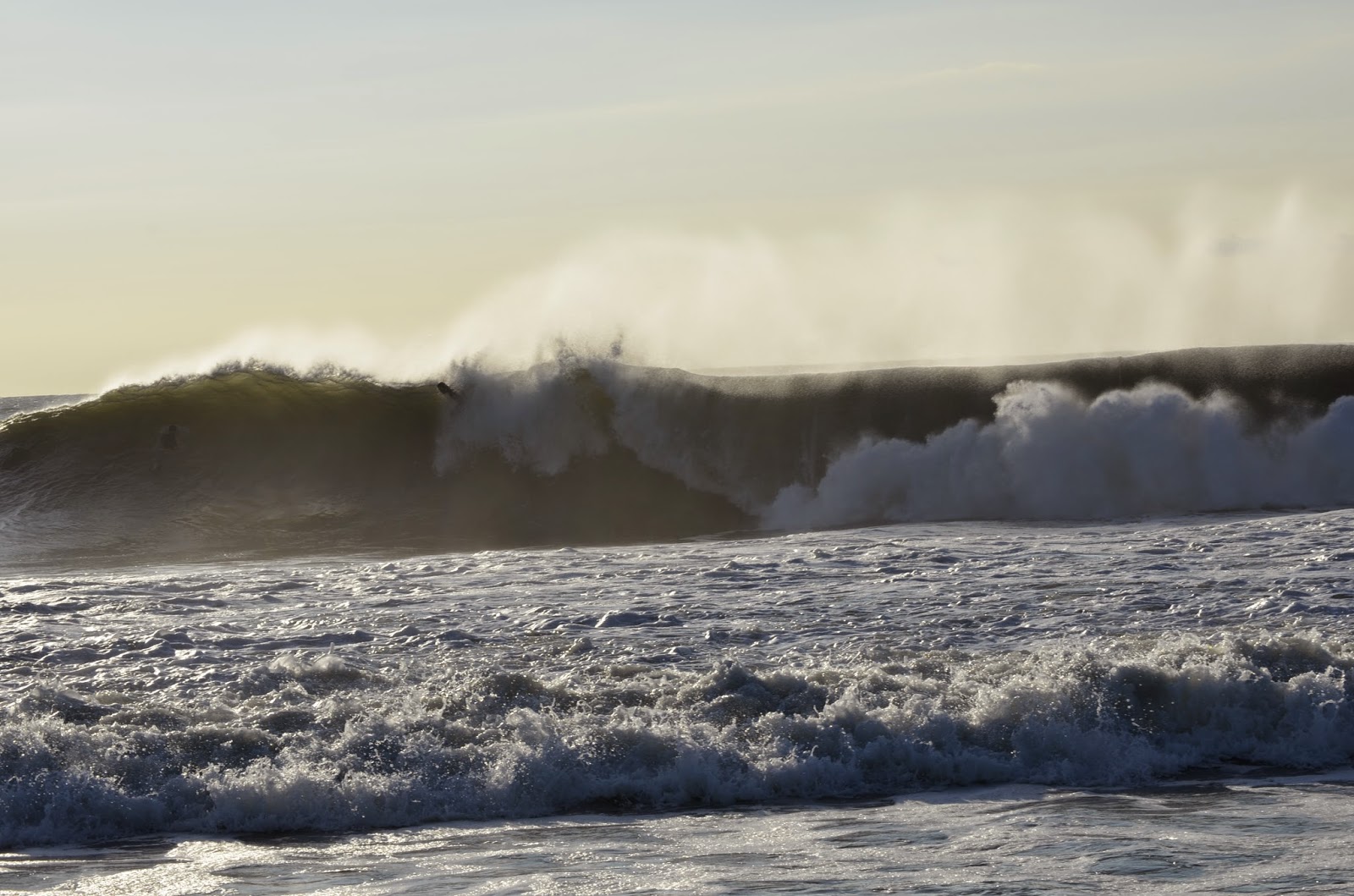
I love it when one of the best waves of a session goes unridden, even in a crowded field of highly talented surfers. It serves as a good reminder that no one bests the ocean -- nobody conquers anything. Rather, we commune with the waves for a period of time, harness the ocean's raw energy, and return to shore rejuvenated, humbled and stoked.

What a truly astounding wave this is, and I am so thankful to mother ocean and the absolute charging locals who shared it with me. About 15 years ago now, I was surfing my home break in New Jersey on a fun four-foot day. I noticed two guys who seemed experienced but not from around here, so I paddled up and asked them where they were from. Portugal, one said. I was shocked. "No way! Where exactly?" They said Peniche. It blew my mind and I expressed how stoked I was to have Portuguese surfers visiting my wave. I officially welcomed them, and told them to have fun. They even said it reminded them of home on a small day. I told them I had always wanted to surf Supertubos. "You must," one said. So I said, "OK, I will," not knowing if I would ever live to see that promise fulfilled.


I was sitting on the beach, preparing myself mentally on a particularly intimidating Supertubos dawn raid -- six foot and barreling heavier than I've seen at that size, eight foot sneaker closeout sets, howling offshore winds, nobody yet out on the peak. A bodyboarder, older than me, with the look and presence of a true OG who I'd seen out a few times, comes up and asks me where I'm from. I say Bom Dia but he asks in English and somehow knows I'm American. "USA East Coast - New Jersey." He gives me a nod and says, "Welcome to our waves," and paddles out. No one had ever just come up to me and been so explicitly welcoming, in all the places I've traveled and shared waves. 

Dues must be payed.

I'm so thankful I was able to surf this wave a lot in different conditions and sizes, and get to know it a bit. I am humbled and in awe of this magical stretch of sand.

Monday, April 10, 2017

New Post on The Inertia: Planning Epic Surf & Wine Trips

My favorite trips revolve around my two favorite things: surfing and wine. Luckily, there are many regions that produce both incredible wine and epic surf.

My new post on the top regions for wine and surf is now up at The Inertia.

Check out the full piece here.


Wine and waves pair perfectly and can be found together all over the world. Credit: Txakoli Ameztoi


Tuesday, November 29, 2016

Wine in the Wilderness - Exploring Humboldt's Lost Coast


No highways cut through here. Mountains drop precipitously into the Pacific Ocean. Everything is wet and the nights are long and cold. This mountainous coastal region of northern Mendocino and southern Humboldt Counties, called the Lost Coast, is the largest stretch of coastal wilderness in the lower 48 states.

I came here for the waves, the stoke, the mountains, the serene darkness of the forest. And, yes, the wine. They make damn good wine out here.

I visited Andrew Morris, the winemaker and proprietor of Briceland Vineyards, on a rare warm and sunny morning in November. The sun poked through after a terrible downpour that lasted all night (a local told me it rained four inches). My friend and I were forced to bail, soaked and frozen, from our flooded tent and sleep in our car. In the morning, we checked the surf, but the tide was dead high, making it impossible to reach our spot. So we grabbed some coffee and drove over the mountains to see Andrew. The drive east on Shelter Cove Road could be described using any or all of the following words: gorgeous, sketchy, stunning — holy shit, bro, you’re way too close to the edge! — mindboggling, etc.

When rainstorms come early, they can be a big threat to the grape harvest, but the grapes had been harvested more than a month ago. My brother, travelling buddies and I visited the Lost Coast in full-swing rainy season. But we lucked out, and only got one soaking wet night out of five. Even when it’s not actively raining, the Lost Coast is a wet place. The air tasted of mountain stream and I could watch individual droplets drift in the thick fog. Cold mountain streams cut through forests, waterfalls pour down rocks cliffs into the sea, dense fog packs narrow valleys, rich moss and ferns pad the ground while massive redwoods block out the sun. After a soaking wet October, mushrooms flourished in the woods. My brother is a mushroom foraging guru, so I just followed his lead and cooked the mushrooms he said were both safe and tasty. 

Hand-foraged mushrooms sautéed over a campfire, paired with Humboldt Pinot is an epic palate experience.

This is an extreme place in every way, and that’s why we came. The weather swings can be extreme. Ditto for the waves, which ranged in size from pumping 10 feet to death-defying 30 feet. My brother and I, lifelong surfing buds, caught some incredible waves, but also spent too much time underwater, getting worked by the cold, chunky surf and currents. Here, the surf is sketchier, the waters sharkier, the roads hairier, and the marijuana smells much, much better. In this environment (like all of the challenging regions home to great wine), growing wine grapes needs to be done with extreme care.

A “good vintage” in Humboldt, Andrew said, would start without a late spring frost, which can damage grapes during critical growing stages. A good vintage would have plenty of ripening days — a certain amount of days with proper sunlight, providing what is needed to fully ripen grapes. And while Humboldt gets fewer ripening days than California regions further south and inland, it’s still ahead of Burgundy. I hear they make some decent Pinot there. A good vintage would also end without an early appearance of autumn’s cold and rain. And, preferably, a good vintage would be free from forest fires, which break out during the dry season and threaten these small, rugged vineyards with smoke taint. Despite these pitfalls, when a finished Pinot Noir or Zinfandel from Humboldt makes it through, the result can be phenomenal.

Take Andrew’s Pinot Noirs, sourced from several single vineyards in southern Humboldt County. These wines are lower in alcohol (usually in the low 13% range) and packed with lip-smacking acidity. They’re incredibly fresh and food-friendly and lack any brazen new oak influences or baked, extracted flavors. The tannins are present and provide structure (combined with the acidity, this makes for great aging potential), but they’re very accessible in their youth. No dark roast coffee or caramel-cola stuff going on here. These are anti-Kosta-Brownes, and I’m stoked they exist.

Andrew studied winemaking at the UC Davis extension and apprenticed with his father-in-law, Joe Collins, Briceland’s founder and winemaker. Gradually, Andrew took the reins. With consummate attention to detail and high technical knowledge, Andrew wanted to keep the reputation of Briceland’s wines going strong.

Andrew and his wife Rosie of Briceland Vineyards.
In the 1970s, Joe Collins began experimental plantings in Humboldt, which was considered by many in the growing California wine industry to be too cold and wet to grow proper wine grapes. But small growers scoped out the right spots, the right grape varieties, and they made it happen. Briceland quickly developed several sources of high quality fruit, most of which are small parcels carved into the forest on steep slopes. By 1985, Joe Collins and Maggie Carey launched Briceland Vineyards.

Like most commercial outfits in Humboldt, this is a boutique operation. Andrew releases only 1,500 cases of wine per year, and about 75% of that never leaves the area. Briceland sells a lot of its wines in restaurants (of which there are few) and local shops. (If you’re headed to Shelter Cove, the General Store has an awesome selection of Briceland’s wines and a bunch of local brews — highly recommended). About 75% of Briceland wines come from Humboldt, while Andrew also works with some really good Mendocino fruit.

I’ve been a huge fan of Mendocino wines for years (and a big fan of the few Humboldt wines I’d tasted), so it was fascinating to taste Andrew’s Syrahs and Zinfandels back to back, one of each from Humboldt and Mendocino. The Mendocino stuff has a bit more richness and darker, sunshiny fruit, while the elegance and tart freshness of the Humboldt fruit really shines through.

There are two ways to get your hands on these wines. You could travel to the area, which will be epic, I guarantee it. Or maybe you could contact Briceland directly. But if you love the adventure of wine, and you’re open to this style, you’ll be thrilled. These wines range in price from about $21 for the white wines to $35 for some of the single-vineyard Pinots — all absurdly reasonable for the high quality of the juice.

Below are my notes on the wines I tasted with Andrew.

2015 Briceland Vineyards Gewürztraminer Ishi Pishi Ranch - California, North Coast, Humboldt County
An exciting, zesty, bone-dry version with tropical fruit and floral spice on the nose. Crisp acidity, medium-bodied with a slightly creamy mouthfeel and flavors of peaches, guava and honey to mix with minerals and white pepper. Delicious, lip-smacking, endless food pairing options. (89 points)

2015 Briceland Vineyards Sauvignon Blanc Humboldt County - California, North Coast, Humboldt County
A vibrant and zesty Sauvignon Blanc with white pepper, lemon and peach aromas. Crisp and very bright with complex elements of salty spice to accent the lemon and green melon fruit. (88 points)

2014 Briceland Vineyards Arneis Spirit Canyon Vineyard - California, North Coast, Mendocino County
Smells of peaches, white flowers, lemon oil and a hint of pepper. So bright and clean on the palate with a salty appeal on top of lemon, orange peel and kiwi fruit. Delicious, nervy and intriguing. Not much Arneis in California, but Mendocino is home to some very good stuff. (90 points)

2014 Briceland Vineyards Pinot Noir - California, North Coast, Humboldt County
Very pretty aromas of tart and spicy cherries, mint and earth. Bright acidity and moderately structured tannins, the cherries are crunchy and delicious and laced with notes of sweet flowers, strawberry greens, clove and an underlying mineral freshness. An eye-opening wine. (90 points)

2013 Briceland Vineyards Pinot Noir Ronda's Vineyard - California, North Coast, Humboldt County
Aromas of gushing cherries and raspberries, lots of rose petal and eucalyptus, too. Lush palate with soft tannins and bright, crisp acidity. Waves of tar black cherries and strawberries, the fruit is laced with notes of spicy clove, wet leaves and mossy earth. Complex, vibrant, straight-up delicious. A uniquely Humboldt Pinot that hails from a 1,600 foot, South-facing slope planted in 1983. (92 points)

2013 Briceland Vineyards Pinot Noir Phelps Vineyard - California, North Coast, Humboldt County
Aromas of juicier, darker cherries with some raspberries and fresh herbal notes. Juicy and fleshy but structured tannins and crisp acidity. Flavors of cola, rhubarb and raspberry leaf tea accent the cherry and strawberry fruit. Lovely spicy complexity. (91 points)

2013 Briceland Vineyards Pinot Noir Alderpoint Vineyard - California, North Coast, Humboldt County
These Pinots keep on firing. This one shows more smoky earth, violets, savory spices on top of juicy cherries. Smooth, fresh and juicy with complex spice, leather and earth accents on top of tart strawberries and cherries, hints of cola and eucalyptus. (92 points)

2014 Briceland Vineyards Pinot Noir Alderpoint Vineyard - California, North Coast, Humboldt County
Sweeter cherry fruit than the 2013, with that same spicy/savory quality and smoky earth. Silky, smooth but tart acidity, the tart red fruit is complex and so bright. Notes of earth, clove, savory mushrooms. Wow, such a pretty wine. It opened up a lot (as friends and I drank the rest of the bottle with dinner). Huge hit. (92 points)

2014 Briceland Vineyards Zinfandel Ishi Pishi Ranch - California, North Coast, Humboldt CountyLove the aromas of tart red fruit and spice. Silky, fresh and spicy with rose petals, earth and spice. Wow. If tasted blind, I could see mistaking this for a Pinot but, when sipped after Briceland Pinots, this shows more sweet flowers and earth. Lovely stuff. (91 points)

2014 Briceland Vineyards Zinfandel Dark Horse Vineyard - California, North Coast, Mendocino County
This vineyard shows aromas of darker cherries and clove. The fruit is (relatively) darker than the Ishi Pishi, showing more black cherry and blackberry, but still so fresh with medium/light tannins. I get notes of clove, tobacco and cola. A vibrant Zinfandel, very interesting to taste back-to-back with the Ishi Pishi Ranch. (90 points)

2014 Briceland Vineyards Syrah Ishi Pishi Ranch - California, North Coast, Humboldt County
Gorgeous aromas of red and black currants topped in black pepper, roasted red pepper and charred herbs. Juicy and so darn fresh on the palate with moderate/light tannic structure. Red cherries, a touch of black cherry, topped in scorched earth, violets, black pepper, beef broth and cured meat. Delicious flavors, this is an intriguing and complex Syrah. (91 points)

2014 Briceland Vineyards Syrah Dark Horse Vineyard - California, North Coast, Mendocino County
Smells like juicy black cherries, leather and spicy pepper. Chewier texture than the Ishi Pishi Ranch, this shows bright acid and medium/light tannins. Red and black cherries topped with pepper, violets and baking spices. So fun and juicy but surprisingly complex. (90 points)

2012 Briceland Vineyards Noir D'Orleans Ishi Pishi Ranch - California, North Coast, Humboldt County
Smells of dark plums and currants topped in loam and spicy clove. Rich but fresh, tart and vibrant, structured nicely with firm tannins. Bright black currant and crunchy plums and notes of peppercorns, roasted red pepper, loamy earth and spiced coffee. Seems like a good one to bury for a few years. Dominated by Petit Verdot, with some other Bordeaux varieties. For those tired of heavy, oak-slathered California Bordeaux reds, try this zesty number. (90 points)

If you're interested, I put together a four-minute GoPro video of my surf adventures here: 


Tuesday, March 8, 2016

Head High: Waves and Wine Pair Perfectly


If youve read anything from me, or followed me on social media, you know I am obsessed and in love with two things: wine and waves. 

I
ve been riding waves since I was three or four, when my Ma put my on her back and rode a bodyboard in the New Jersey shore break. And Ive been tasting and enjoying wine since before I could legally purchase bottles of my own. Over the course of my 20s, and now into my 30s, Ive managed to tie these two loves together quite well. I am drawn to remote coastal areas with diverse wave zones, cold water and great wine. Sonoma Coast, Mendocino, Santa Barbara, South Africas Western Cape, these places call to me to surf their waves and swirl their wines. (Western Oz, Chile, Galicia, you’re all on my list.)


The California coast is one of the most generous and consistent wave zones on the planet. Same goes for its winegrowing regions. (Photo: IJB)

Sam Spencer in his natural habitat. Credit: Head High Wines
Im not the only guy who lives for both of these things. Sam Spencer, partner and winegrowing director at Head High Wines, is a kindred spirit. Born in DC, Sam learned to surf in Rhode Island, whose waters are even colder than my home waves of New Jersey. He studied at UC Davis winemaking program, and worked 20 years as a wine consultant and vineyard developer. Of course, this work kept him relatively close to the coast, which allowed Sam to take frequent surf breaks.

Now Sam has his own venture, Head High Wines, named for the term surfers use when the surf is breaking at about 5-6 feet. He produces three wines, a rosé of Pinot Noir from the Sonoma Coast, a Sonoma Coast Pinot and a red blend from various vineyards scattered around California’s North Coast appellation.

Sam explained the connection between waves and wine in a manner that mirrored my appreciation for this unique coastal-oenological relationship. Great wine requires a convergence of several different elements: climate, soil, vineyard site, weather conditions. Great surf happens when swell (created by wind over water) aligns with a certain type of shallow underwater surface, and light (preferably off-shore) wind conditions. It only happens at specific spots, at specific times, under these specific circumstances. If one of the elements is missing (in both wine and surf) you get skunked.

Of course, there is the human element — the dynamic interaction between a driven person and the living power of the natural world. Not many people have this insatiable desire to get off their ass and paddle into big, sketchy surf, or trek out to the vineyard to pick the Pinot when the Brix levels are just right. But surfers and winemakers can’t help themselves. Sure we use new technology to aid us in these pursuits (neoprene for cold waves, stainless steel for cold stabilization), but wine and waves are both examples of Mother Nature’s control over the process. 
We humans just show up at the right time and revel in it.

Sam says he doesn’t make wine for surfers, and you don’t need to be a surfer to “get” these wines — you only need a functioning nose and palate. But, that said, there’s an added textural element to these wines you’re a wave-lover.
I recently met up with Sam at one of my favorite DC restaurants, the Red Hen, and we traded surf stories for a few hours. Sam is no kook. The dude surfs California’s North Coast breaks on the regular and has traveled to more than a few of my bucket list surf spots, Fiji, for example.

Head High has also teamed up with Sustainable Surf, an ocean conservation non-profit. One buck from every bottle goes to this charity or the Sonoma Valley Education Foundation. Good on ya, Head High.


What I liked most about Head High, despite the surfing connection, was their accessibility in terms of price and style. The wines run between $25-$35, which is about the cost of a cheap pair of wet suit gloves. Head High juice is bright, fruity, pleasant, but by no means simple.

Below, I’ve pasted my notes on Head High’s current releases.
Credit: Head High Wines

2015 Head High Wines Rosé - California, North Coast
($24)
Bright watermelon color. Crisp and juicy with bright acid and fresh strawberry and watermelon flavors. A blend of Zinfandel, Syrah, Grenache and Tempranillo.

2013 Head High Wines Pinot Noir - California, Sonoma County, Sonoma Coast 
($35)
Smells smoky and earthy with deep dark fruit. Full and plummy on the palate. Rich but a great juicy texture. Plums and blackberries mixed with cocoa and coffee. Smooth, long finish. Very nice.


2013 Head High Wines Red - California, North Coast

($30)

Juicy, fleshy, lovely texture, full with lush berry fruit but shows a nice tart edge along with hints of earth and warm spice. A blend of Malbec, Merlot, Cabernet Sauvignon, Zinfandel and Grenache from Sonoma, Lake and Napa Counties, aged 15 months in 35% new French oak.

Monday, November 9, 2015

New Essay Up On The Inertia - From Starved to Stoked: How Surfing Saved My Life

If you're not interested in surfing, you may not have heard of the website The Inertia. A lot of surfing media sites are full of editing errors, terrible "reporting" and lame listicles. In addition to amazing videos and pictures, The Inertia publishes a lot of solid writing as well. So I'm honored to have a new essay up on the site today called "From Starved to Stoked: How Surfing Saved My Life." In the piece, I tell the story of how my love for surfing brought me back from the brink.

The piece can be found here. I hope you enjoy it. Cheers!

Tuesday, July 7, 2015

Essay Published in The Inertia

I'm stoked to announce The Inertia has just published an essay I wrote a while back about chasing hurricane surf in New Jersey.

Check it out by following this link.


Wednesday, July 1, 2015

Delaware Serves Up Some Summertime Waves

A nugget of paradise, courtesy of the Delaware shore.
Riding waves is my deepest passion. I'm not a religious person, but communing with the ocean is something akin to a spiritual experience for me. When too much time passes without waves, I get seriously depressed, like my soul is tired. But then a swell pops up and dishes out waves, and all is well again.

Summertime on the East Coast is notorious for its lack of waves. Except for tropical storms, waves are hard to come by. So I was beyond stoked when a solid swell popped up earlier this week, peaking on a Sunday morning no less. I arrived at one of my favorite East Coast spots at dawn on Sunday and was greeted by grinding, barreling waves. I surfed for six hours and took a few awesome beat-downs, but left feeling content and renewed.

I threw together a brief edit of some GoPro footage from this recent swell, posted below. If you're interested, check it out! Cheers!


Wednesday, October 15, 2014

Chasing Cristobal: A New Jersey Surf Story

Cristobal charges into New Jersey waters on August 29. All photos in this post come from Harold Wintters.
“You can surf in New Jersey?”

“New Jersey has waves?”

I get these questions all the time when people ask about my lifelong passion for Garden State waves. Yes, we get waves. Good waves. But like everything worth chasing, the timing has to be right. 

Everyone seems to have an opinion of the Jersey Shore, even if they’ve never been there. Most of the people who have been to New Jersey probably visited the Shore during summer, when the beaches are packed and the air reeks of Coppertone and body spray. Here, tourists bask in the reaffirmation of their long-held stereotypes. Is the sand cramped with orange-hued sunbathers? Yes. Are there d-bags who shave their stomachs and strut around with chests puffed out? Oh, hell yes. Are there waves? Most of the time, no.

The water is calm and clean and cools the hot skin. On summer mornings, the sea is a green glass sheet. While everyone tans on the beach and wades into the shallows, surfers linger around, waiting for something — anything — to happen. Even though it’s gorgeous and sunny out, surfers struggle through the summer months.

But when a tropical storm charges up the Atlantic, everything changes.


Thursday, January 30, 2014

Talking Wine and Waves with John Conover

Credit: PlumpJack Group
John Conover’s a big guy with an unassuming personality. He laughs loudly and often. And if you spend more than five minutes with the guy, you’ll realize that he’s a man who loves life.

Since 1999, John has been general manager at Napa Valley winery PlumpJack, which is co-owned by California Lieutenant Governor Gavin Newsom and San Francisco philanthropist Gordon Getty. During Conover’s time, the estate has grown from 1,000 cases a year to 10,000, and PlumpJack’s Oakville Estate offering has developed quite a reputation. Conover is also a partner in Cade, a Howell Mountain estate, which kicked off in 2009. And he has his hands in a third Napa project, Odette Estate, which recently opened at the former Steltzner Vineyards property.

It’s hard to imagine how Conover does anything else. But, like me, John has another powerful passion: surfing. We’re both members of two global tribes (wine nerds and waveriders), so John and I had a lot to talk about when we met a few weeks ago at Civil Cigar Lounge in Washington, DC.

I always enjoy meeting other surfers. We’re a fun- and nature-loving group, and we love putting ourselves in extreme situations just for kicks. John told me stories of surfing through heavy kelp in Santa Cruz and Monterrey, and I traded tales of catching bombs at Salmon Creek, a beach break on the Sonoma Coast, and getting into some shady situations at remote spots in Mendocino. My stories of chasing swell around New Jersey and Delaware beaches couldn’t really compare with his frequent reef pilgrimages to the North Shore, the Mentawais and Indo. But, then again, the guy runs several big-time Napa Cabernet projects, and I’m a writer.

John seems to strike a balance between his wine and his surfing. He tries to paddle out a few times a week. During harvest, when the grapes are reaching peak ripeness and the Pacific is lighting up with swell, things can get a little hectic. (I know the feeling. Try to get me to commit to anything during September. When the Atlantic starts kicking, I cannot be relied upon.)

We tasted through some of his 2010 Napa Cabernets, a vintage we both praised for its freshness and vibrancy. “But,” he added, “just wait until you try the 2012s. And the 2013s.”

I asked John about some of the changes at PlumpJack over the years. He told me he never thought he’d have a double-digit number of employees. “But now I have 40 of the most passionate people in the world.” It’s simple, he says: “Great grapes and great people make great wine.”

The wines, I have to admit, are damn good. And they’re highly delicious. There’s no denying a similar stylistic thread weaves through Cade and PlumpJack. (I haven’t yet tasted Odette Cabs.) “Approachable” is a word Conover embraces, and it’s a fitting descriptor. The 2010s have tons of flavor yet — dare I say? — a graceful presence on the palate. Even so, I’d love to stash some Cade and PlumpJack 2010s away for five or six years, just to see what kind of deliciousness seeps out.

I took some notes on four wines from the evening. Check out my notes below.

2012 Cade Sauvignon Blanc - California, Napa Valley
$50
Aromas of white peach, green apple, honeysuckle and lemon zest. Crisp and clean on the palate, with green apple peel, white peach and apricot flavors. I love the mineral and sea shell components to this wine. In a sea of mediocre Napa Sauv Blancs, this one exudes personality.

2010 Cade Cabernet Sauvignon Napa Cuvée - California, Napa Valley
$60
Smells so floral and fresh, with blackberries, rose petals, vanilla bean and sweet mocha. The palate is full of flavor, but so silky, fresh and downright sexy. Sweet berries, kirsch, vanilla, cedar, cola and root beer flavors abound. So pure and lively, with notes of loam and potpourri on the finish. Seems like one of the most approachable 2010 Napa Cabs I’ve tasted, although it’ll hold up well.

2010 Cade Cabernet Sauvignon Howell Mountain - California, Napa Valley, Howell Mountain
$80
Similar to the 2010 Napa Valley blend, but a bit deeper, showing a bit more fight and grip. Fine tannins, crisp acid, lovely complexity of black and red currant fruit. Notes of violets, cola, mocha, cedar, vanilla and campfire coals. Complex, so full yet pure and easy to drink. A gorgeous Howell Mountain Cab. 100% Cab aged 18 months in 80% new French oak. This deserves some cellar contemplation.

2010 Plumpjack Cabernet Sauvignon Estate - California, Napa Valley, Oakville
$100
Aromas of blackberries, currants, dark chocolate shavings and cedar. Firm but somehow silky tannins, and that lovely 2010 freshness. The wine is like velvet on the palate, with black cherries, currants, vanilla, violets, cola and note that reminds me of sweet and sour sauce. Unashamedly delicious and easy to drink, yet this wine is full of complexity and structure. Drank from a magnum decanted, and it was beautifully expressive, getting more so with each minute.

May your Napa Cabs be delicious and your winds offshore. Cheers!

This post first appeared in the daily wine blog Terroirist.

Sunday, August 4, 2013

Mendocino Dreaming: Surfing and Sipping Parducci Wines


Cold, remote and rugged, the Mendocino Coast is full of empty (and sharky) surf spots.
Wine and waves are two of my favorite things in life. On a recent trip to Mendocino County, California, I got to enjoy both in the same day.

I was visiting with friends and family in Potter Valley, a small inland enclave that’s home to an increasing amount of vineyards. My mother, father, brother, sister and I all got up well before dawn and loaded up the car. My brother drove us up steep mountain roads lined with redwoods until we reached the coast. I’ve spent a lot of time in Mendocino — it’s one of my favorite places on the planet so far — but each time I catch a glimpse of the rugged, rocky coast, my stomach knots up with excitement.

The remote beach we chose was populated only by a handful of sleeping hippies. My brother and I suited up and paddled out into 50-degree waves. We surfed some frigid five-to-six foot beauties as the sun rose over the mountains to the west. After a few hours, I couldn’t feel my feet or move my lips, but I was in a state of complete bliss. Later that morning we hit up at a beach break at the mouth of the Big River and caught another hour’s worth of solid waves. When we couldn’t surf any more, we packed up the car and head inland.

A hillside Sauvignon Blanc vineyard in Potter Valley, Medoncino.
The next stop was Ukiah, home to one of my favorite Mendocino County winemakers, Parducci. I’ve spent many hours in the Parducci tasting room, sipping from their wide array of wines, touring the vineyards and winery. Still, Parducci is one of those places I’ll always come back to. Even though Parducci is a large producer, their tasting room is totally Mendocino: laid back, rustic, calm. I wore sandy flip-flops and a death metal T-shirt while others wore dusty boots and tank tops, and no one gave a damn. My tasting crew had grown to ten, including a baby in tow, and we all crowded around the bar to taste through Parducci’s portfolio. The tasting room attendant took care of our group like a pro, serving up decent-sized pours, answering questions, telling stories.

We started off with a few wines from Parducci’s Paul Dolan label, which is focused on organic and biodynamic fruit. Generally, the winery strives for organic grapes in most of their wines, but Paul Dolan wines fully embrace organic viticulture and winemaking. Paul Dolan also embraces the Potter Valley appellation on some of their labels. Much of the fruit from Potter goes into blends that sport a simple Mendocino County label, so it’s nice to see a producer trying to get the name of this appellation out there. I may be biased because I’ve spent a lot of time in Potter Valley and loved every minute of it, but I really think this is a special winegrowing region. Sauvignon Blanc, Chardonnay and Pinot Noir do very well here in the dry climate and long growing season. It gets hot during the summer, which allows the fruit to grow plenty ripe, but during my July trip the temperature dropped 45 degrees at night, which helps the wines maintain crisp acidity.

Here are my thoughts on the Parducci wines I tasted…

N.V. Paul Dolan Vineyards Brut - Mendocino County ($27)
Paul Dolan’s done a great job making a Mendocino Brut at a very reasonable price. This blend of 55% Pinot Noir and 45% Chardonnay smells of lemon, lime and freshly baked biscuits, a hint of butter. The palate is loaded with minerals and acid, backed up by crisp lime and green apple fruit. Very focused with delicate brioche and lemon butter undertones. Brisk, long finish. I’m impressed. (90 points)

2011 Paul Dolan Vineyards Sauvignon Blanc - Mendocino County, Potter Valley ($18)
It’s nice to see Paul Dolan embracing the Potter Valley label. This Sauvignon Blanc is a good example of what Potter can do with this grape. The wine smells of guava, honey, some flowers and just a whiff of chive. Juicy guava on the palate but the grapefruit and lemon flavors are zesty. I really appreciate the zippy acid and high minerality in this wine. Just a hint of grass, but this isn’t your average lawnmower New Zealand Sauvignon Blanc. (88 points)

2011 Paul Dolan Vineyards Chardonnay - Mendocino County ($18)
Aromas of white flowers, brisk lemon and honey. Creamy on the palate with notes of whipped honey and nougat, but the citrus fruit keeps it tangy and balanced. A nice mineral tinge to the finish. Aged for five months in 15% new French oak and 85% stainless steel, giving the final wine a combination of richness and crispness. Well-done stuff. (88 points)

2010 Paul Dolan Vineyards Zinfandel - Mendocino County ($25)
Lots of stuff going on aromatically: a burst of wild strawberry and blackberry, mocha, pepper and an aroma that reminds me of dried hay or a briar patch or something. Anyway, it smells good. Loads of plums on the palate, a bit raisined perhaps, but not too much. Creamy tannins and medium acid come together to make this easy to sip and enjoy. Big, but not too overbearing. (87 points)

2010 Paul Dolan Vineyards Pinot Noir - Mendocino County, Potter Valley ($38)
Hey, this looks like Pinot! Light ruby color. A cranberry focus on the nose, along with spicy pepper notes, earth and sweet lavender. Beautifully aromatic and deserving of more than a tasting room sniff. On the palate, the acid is wonderfully brisk. Fine, creamy tannins support the fresh cranberry and cherry fruit. This shows some really interesting savory and earthy tones, and a bacon note lingers on the long finish. Elegant and light (with a moderate 13.5% alcohol content) but not simple in any way. I know Anderson Valley gets all the love, but I’m really digging Potter Pinot Noir. This wine is aged 19 months in 23% new oak barrels. (91 points)


I appreciate the way Parducci produces a range of wines at all sorts of price points. Their cheaper labels like the Small Lot Blends and Sketchbook are frequently good buys. I was also happy that the True Grit Petite Sirah made a showing at this tasting, as I’ve enjoyed previous vintages. In fact, it’s high up there on my list of best California Petite Sirahs.

2011 Parducci Pinot Noir Small Lot – California ($14)
I rarely recommend $14 Pinot Noirs. Well, here’s one. Light cranberry color is the first good sign. On the nose, strawberry jam mixes with rhubarb and subtle pepper. Fine tannins, crisp acid, a light and tangy approach. Strawberry and raspberry fruit with notes of vanilla and caramel. It’s not the most complex Pinot, but it does what it does very well. Harmonious and crowd-pleasing, it seems everyone at the tasting enjoyed this wine. (87 points)

2010 Parducci Cabernet Sauvignon Small Lot - Mendocino County ($14)
A combination of black and green pepper kicks off the nose, but there are also some saucy black cherry and currant aromas. Very creamy and silky on the palate with soft tannins for a Cabernet and medium acid. Currant and plum fruit is dusted with loam, bell pepper and toasty notes. Easy-drinking and a good Cab for $14. A blend of 88% Cabernet Sauvignon, 7% Merlot, 4% Cabernet Franc and 1% Petite Verdot. (85 points)

2010 Parducci Grenache Reserve - Mendocino County ($27)
A cranberry-plum color with thick legs in the glass. Dense on the nose, rather closed at first. I let it sit, swirled it around, and started getting raspberries, caramel and spice notes. Rich but juicy on the palate. Nice mix of blueberry and cranberry fruit, along with hazelnut, tobacco and loam. This wine tasted riper and more forward than the other wines in this tasting, but it holds its ripeness well. Huge flavor packed in here. This is a really young wine that could benefit from a long decant or some cellar time. Aged 20 months in seasoned French and American oak. (88 points)

2010 Parducci Petite Sirah True Grit - Mendocino County ($29)
This is the best True Grit Petite Sirah I’ve tasted so far. Inky black-purple color with thunder thighs in the glass. Huge nose of blackberry puree and boysenberry but there are also some potpourri and lavender aromas that rock. Dense and lush on the palate with firm, grippy tannins. The plum and boysenberry fruit is rich and pure, and accented by notes of grilled steak, earth and charcoal. Long, dusty finish. This is a really young wine that would benefit from a decant, but it’s beautiful stuff. One of the best Petite Sirahs I’ve had in a long time. (91 points)

2010 Parducci Port Reserve - Mendocino County ($30)
Big and sweet on the nose, with prunes, plum cake, vanilla wafers and rich mocha. Actually quite silky on the palate, with medium tannins. Fig paste, prunes and brandied plums on the palate, with notes of caramel and nuts. A little heat from the alcohol, but it’s not too bad. Everyone at the tasting enjoyed this wine. Bring on the bleu cheese. A unique blend of 50% Souzao, 20% Tinta Cao, 17.5% fortified brandy and 12.5% Touriga Nacional. (88 points)

See you in Mendocino!