Showing posts with label Stellenbosch. Show all posts

Friday, August 29, 2014

DeMorgenzon: Harmonious Stellenbosch Wines

In May, I spent a few weeks in South Africa, surfing, tasting wine and watching wildlife. I had a great time visiting wineries around Walker Bay and Stellenbosch. The last wine stop on my trip was DeMorgenzon, located in the hilly western part of Stellenbosch.

We arrived at the beautiful winery grounds one afternoon and met up with Carl van der Merwe, the winemaker and general manager. He showed my wife and I around and poured some wines from his line-up. We had a great time tasting and talking and afterward he showed us around the winery, gardens and vineyards. DeMorgenzon is located on a sloping hill with a beautiful view of the ocean on a clear day. The name means morning sun, which this area of higher elevation gets plenty of. It’s a great place to walk around and the wines are consistently delicious.

This is actually the afternoon sun, but it's a beautiful place in any light.
As we were walking around the vineyard, I noticed speakers mounted on poles around the vineyards. They were playing calming classical music. Carl explained that these speakers treat the vines to classical music 24-7. Baroque music, to be specific. The music can be heard in the vineyards and throughout the cellar and barrel rooms. The idea is that this type of music has calming and positive effects on the life of the vines, resulting in a more harmonious wine. Carl said something about the mathematical precision and rhythm of this particular style being good for living things, but it was clear the music isn’t his idea.

I’m not fully sold on the notion of playing music to grapevines, but there are some studies that show DeMorgenzon might be onto something. (Grape Collective explored the subject of vines and music further in this interesting piece.)

Regardless of the Baroque music, the unique terroir and Carl’s winemaking result in some compelling wines. No Pinotage here, but DeMorgenzon’s portfolio is a great example of the wines of Stellenbosch.

2013 De Morgenzon Sauvignon Blanc DMZ - South Africa, Western Cape
Rich papaya on the nose, touched with lime and fresh honeysuckle. High acid, creamy, richly textured on the palate. Papaya, green apple and a very mild hint of grass. Combines freshness and minerality with some openness and fruit-forward gusto. A lot going on, but it’s balanced by lasting acid. (88 points)

2013 De Morgenzon Chardonnay DMZ - South Africa, Western Cape
Fresh and floral on the nose, with sea breeze and rich peaches. Very bright and attractive. On the palate, this wine is lively with kicking acid and lots of different fruit notes: green melon, lime, green apple. I also get honeysuckle, daisies and some sea salt. Creamy, nutty, but tangy. Fermented in a mix of oak and stainless steel. (87 points)

2013 De Morgenzon Chenin Blanc DMZ - South Africa, Western Cape
Aromas of saline, honeysuckle, cantaloupe and oyster shell. Tingly acid, creamy body, with flavors of papaya, cantaloupe drizzled with lime and some waxy tones. Playful, fruit-forward, fermented in a mix of stainless steel and old oak barrels. (86 points)

2013 De Morgenzon Chenin Blanc Reserve - South Africa, Coastal Region, Stellenbosch
Loving the depth and complexity on the nose: saline, crushed rocks, mountain streams, clover, green tea, all of it accentuates the apricot and white peach fruit. Superb balance on the palate between richness and acid. Apricot, white peach, glazed pear, add in some nougat, honey, white tea and mineral notes. A gorgeous Chenin Blanc that could develop a lot more in the cellar. All barrel fermented (25% new) the fruit comes from 40+ year-old vines planted in granite soils.  This was my favorite Chenin Blanc of the entire trip. (91 points)

2013 De Morgenzon Maestro White - South Africa, Coastal Region, Stellenbosch
Potpourri like crazy on the nose! Tons of white flowers, yellow wild flowers, lavender, some saline on top of lemon and green and yellow apples. Creamy body, with lots of melons, apricot and papaya. Notes of hazelnut, honey, hint of white cherry. Crisp, juicy, quite complex, capable of development over the next few years. A blend of 37% Chenin Blanc, 24% Chardonnay, 24% Roussanne and 15% Viognier. (90 points)

2012 De Morgenzon Syrah DMZ - South Africa, Coastal Region, Stellenbosch
Dark purple color. Smells rich and jammy with dark fruit, spice and deep floral tones. Black currant and blackberry jam on the palate, this is firm but fleshy, with cedar, earth, smoke and a whole lot of black pepper. Let me say it again: this is a very peppery Syrah. If you like that, this is for you. Not a ton of complexity, but a solid Syrah. (86 points)

Maestro, get it? They really like
classical music at DeMorgenzon.
2011 De Morgenzon Maestro Red - South Africa, Coastal Region, Stellenbosch
Deep aromatic complexity: dark, chilled fruit, eucalyptus, menthol, cedar and earth. Wonderful texture on the palate, elegant but firm. A complex fruit assortment glides across the palate: fleshy plums, currant jam, fig paste and cool blackberries. I get dark chocolate, vanilla, black pepper, eucalyptus and a note that reminds me of a dry, dusty road. Graphite and cedar linger long on the finish. Gorgeous now, but lay it down and be rewarded. A blend of 41% Merlot, 35% Cabernet Sauvignon, 11% Petit Verdot, 7% Malbec and 6% Cabernet Franc, aged 12 months in 25% new French oak. (91 points)

Monday, July 7, 2014

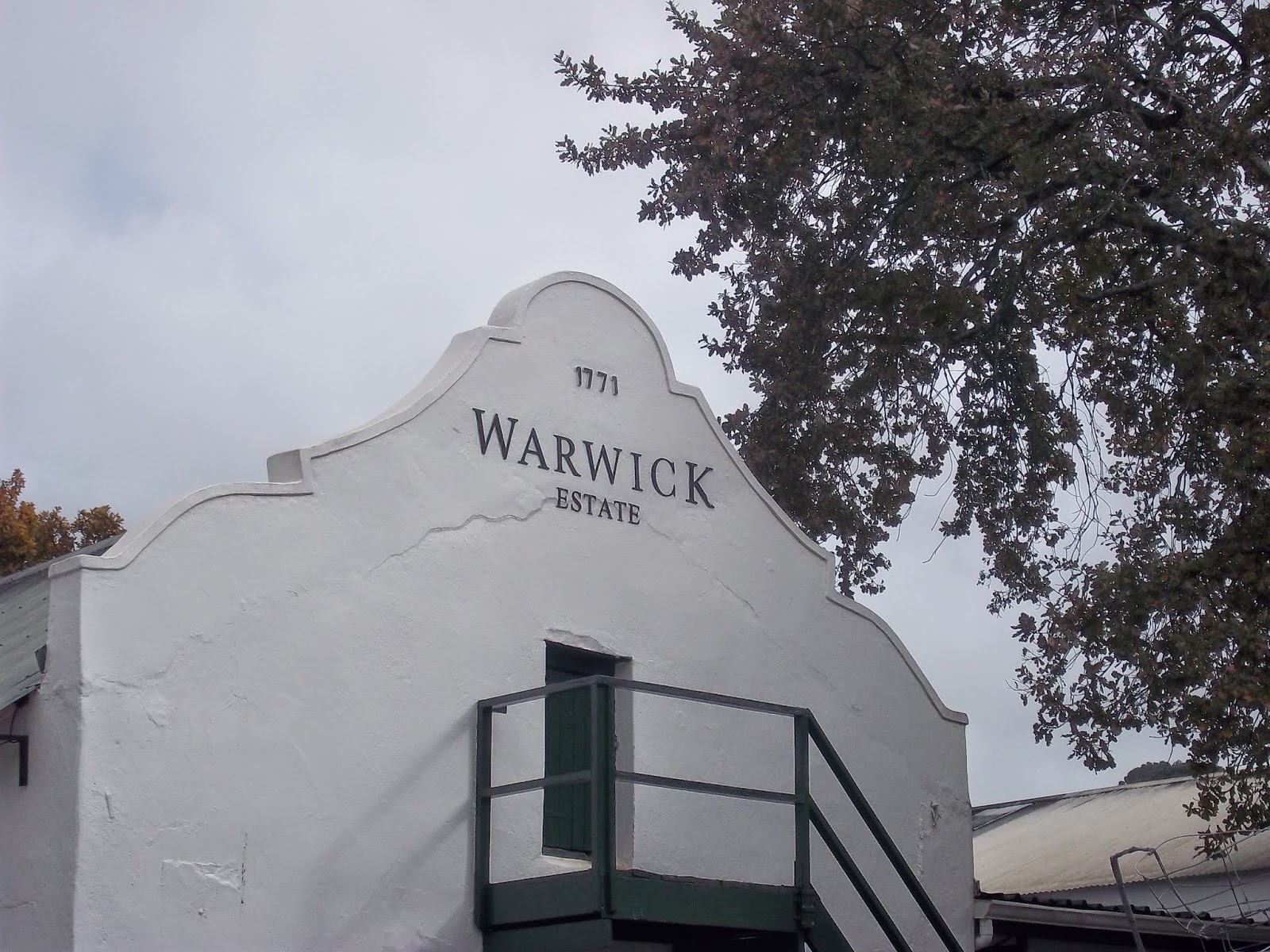
Warwick Estate: Stellenbosch in a Wine Glass

I recently visited South Africa for the first time and had some incredible experiences. I've been chronicling my South African wine adventures for a few weeks now, but before I shift to other places and wines, I wanted to talk about a memorable visit to Warwick Estate in Stellenbosch.

Warwick produces a wide range of wines. Their entry-level Sauvignon Blanc and Chardonnay are delicious and crowd-pleasing white wines that I’d love to see on some by-the-glass lists. Warwick’s high-end Cabs and Bordeaux blends reach that next level of quality and depth, tempting you to take advantage of the cellar door prices and load down your suitcase.

My wife and I visited Warwick before lunch one day, and tasted through the lineup with Mike Ratcliffe, who manages his family’s estate. Mike, the third generation Ratcliffe to run Warwick, is also a partner in Vilafonté, a Paarl-based project that makes some seriously impressive Cabernet- and Malbec-based blends. He shared stories of his family’s history, information about the estate vineyards and the fable of the wedding cup, which inspired Warwick’s wine labels and the brand’s overall aesthetic.

The Warwick wines are fresh and modern, but the whole Warwick experience is tinged with history. From 1771 until the end of the Anglo Boer war in 1902, the Warwick Estate was a farm called De Goede Sukses. When the war ended, Colonel William Alexander Gordon bought the estate, and as the Commanding Officer of the Warwickshire regiment, he changed the name as a tribute to his regiment.

Stan Ratcliffe bought the estate Warwick Estate in 1964 after searching the Cape for a good spot to lay down some Cabernet Sauvignon roots. His wife Norma became interested in the winemaking process and began studying. She was good at it, and in the late 1970s she became head winemaker.

In 1984, she released her first Cabernet Sauvignon, La Femme Bleu, now called The Blue Lady. Two years later, she produced her first Trilogy, a wine that would go on to become a reputable South African Bordeaux-style blend. Norma’s work was recognized by her colleagues in the South African wine world — she became the first woman member of the Cape Winemakers Guild and the only woman to act as Chairperson.

Today, Warwick pays homage to Norma Ratcliffe’s trailblazing efforts by continuing her work with Bordeaux grapes, and through the label art, the brand imagery and proprietary names like The First Lady.

Here are my notes on Warwick’s lineup…

2013 Warwick Estate Sauvignon Blanc Professor Black - South Africa, Western Cape
Fruity and floral on the nose, with peach, green melon and some lemon pith, a slight but pleasant seaweed note. Fresh and fruity on the palate, not green and herbal, with a salt and mineral touch to the generous peach fruit. Very pleasant, easy-drinking style. Includes 14% Semillon. (87 points)

2013 Warwick Estate Chardonnay The First Lady - South Africa, Coastal Region, Stellenbosch, Simonsberg-Stellenbosch
So tropical on the nose, with juicy mango, guava nectar and honey. Rich and plush on the palate with guava and honey, some freshness from the acid. An entry-level, unoaked, playful wine, approachable but still well made and attractive. (86 points)

2012 Warwick Estate Chardonnay The White Lady - South Africa, Coastal Region, Stellenbosch, Simonsberg-Stellenbosch
Much more complex on the nose than the First Lady Chard, with lime and white peach, slate, crushed sea shells and hazelnut shells. Tangy and fresh on the palate, but a perfect blend of richness. I get mixed apple and melon fruit along with slate, mineral and lots of dried flowers. The hazelnut and toasted coconut shaving flavors are woven in perfectly. Long and pure, this is fermented in 1/3 new French oak using wild yeasts, no maloactic fermentation and they roll the barrels instead of stirring the yeast to reduce oxygen contact. A very pretty Chard that could develop more with near-term cellaring. (90 points)

2011 Warwick Estate Cabernet Franc - South Africa, Coastal Region, Stellenbosch, Simonsberg-Stellenbosch
Aromas of red berries, black pepper, English breakfast tea, some pepper, sweet lavender. Firm tannins, rich but velvety with lots of smooth berries. Complex notes of cedar, spice, cigar box, some black olive, cola and spice. Herbaceous qualities add complexity but play back-up. So silky but I'd wager this is three-to-five years from its peak and it will hold for much longer. The tasting room attendant said Warwick was the first in South Africa to make a varietal Cab Franc (this is 100% Cab Franc). Aged 24 months in 60% new oak. (90 points)

2012 Warwick Estate Cabernet Sauvignon The First Lady - South Africa, Coastal Region, Stellenbosch, Simonsberg-Stellenbosch
Juicy raspberries and strawberries on the nose, along with cola and spice. Fleshy and juicy on the palate with bright berries, cedar and cola. Smooth, fresh, very pleasant and enjoyable now. 100% Cabernet aged 18 months in old oak. Ready to drink now or in the near term. (87 points)

2012 Warwick Estate Pinotage Old Bush Vines - South Africa, Coastal Region, Stellenbosch, Simonsberg-Stellenbosch
Smells of spiced berry tea, cola and juicy strawberries. Fine tannins and medium acid provide a lively mouthfeel for the fig, raspberry and strawberry fruit. I get notes of roasted coffee, smoke and sweet cola. Soft, almost elegant, with a spice-toned finish. I probably wouldn’t guess Pinotage if served blind, but it’s very nice and I really enjoy this polished style. Aged 9 months in old French oak barrels. (88 points)

2011 Warwick Estate Three Cape Ladies Cape Blend - South Africa, Coastal Region, Stellenbosch, Simonsberg-Stellenbosch
Smells of sweet raspberries and blackberries, along with cola, smoke and tar. Solid tannins on the palate with pulpy plum and tangy black currant fruit. Notes of violets, iron, cedar and coffee add complexity. Finish with tar and smoke. A big, pretty, ageworthy blend of 37% Pinotage, 31% Cabernet Sauvignon, 28% Shiraz and 4% Merlot. (Normally, there are only three grapes, hence the name Three Cape Ladies, but this year they put in a dash of Merlot.) (88 points)

2010 Warwick Estate Trilogy - South Africa, Coastal Region, Stellenbosch, Simonsberg-Stellenbosch
A dark purple color. Aromas of deep black cherry and plums, mixed in with red licorice candy, tobacco, spearmint and charred meat. Silky but bold with interwoven tannins and medium acid. Berry compote is laced with spearmint, pepper, mocha and subtle vanilla and cedar. Great balance. Gorgeous now but could easily benefit from five to 10 years in the cellar. One of the best Bordeaux blends of my trip, this is a very impressive wine worthy of serious attention. A blend of 56% Cabernet, 30% Cabernet Franc and 14% Merlot, aged 26 months in 60% new French oak. (92 points)

2011 Warwick Estate Cabernet Sauvignon Blue Lady - South Africa, Coastal Region, Stellenbosch, Simonsberg-Stellenbosch
Aromas of black currants, smooth plums, earth and cola. Grippy on the palate with lots of power. Black currants, plum, earth and charcoal. Also I get notes of black olive, tobacco leaf, wet leaves. This is made from a few select barrels that would’ve gone into the Trilogy, and I like how Warwick bottles this separate Cabernet. It’s muscular but also elegant. All Cabernet, aged 27 months in 60% new French oak. Wow. (91 points)

If you ever find yourself planning a winery tour to Stellenbosch, I highly recommend visiting this estate. Warwick is open for tastings from 9-5, 365 days a year, so just show up and enjoy yourself.

Cheers!

Wednesday, June 25, 2014

Stark-Condé Winery: An Essential Stellenbosch Experience

The view from outside the Stark-Conde tasting room is one to behold.
When I was planning my trip to Stellenbosch, South Africa, Stark-Condé winery was on the top of my list. I’ve enjoyed a few of their wines in the past, and knew of their outstanding reputation. But visiting in person was far better than I could’ve imagined.

Located in the Jonkershoek Valley, a more highly elevated area of the larger Stellenbosch region, Stark-Condé is one of the most stunning and awe-inspiring wineries I’ve visited. Period.

When I arrived in late May, near the start of the South African winter, the area was a few degrees cooler than Stellenbosch central, and a heavy fog lingered. The views of the surrounding mountainous are epic. The tasting room is located on a small island gazebo in the middle of a pond, surrounded by weeping willows and squawking ducks. There’s something serene about tasting wine in this location.  
 
Beneath those willows on the left lies the tasting room. What a spot!
Winemaker Jose Condé casts quite a wide net with the varieties he vinifies and the different wines he produces. But Stark-Condé is best known for their Bordeaux varieties. Unfortunately, I didn’t taste any of the higher-end Three Pines series, but I was still impressed with the rest of the lineup.
 
If you’re visiting Stellenbosch, I dare say a stop at this winery is an absolute necessity. Here are my notes on the wines I tasted.

2013 Stark-Condé The Field Blend - South Africa, Coastal Region
Love the lemon, honeysuckle and potpourri nose. Zippy and tangy on the palate with lemon, pineapple and quince. I get some creamy notes, but this is a mineral- and flower-driven wine. Lots of stuff going on here. A unique and exciting blend of 44% Roussanne, 41% Chenin Blanc, 8% Viognier, 7% Verdelho, all co-feremented, 60% in tank, 40% in oak barrels, 10% new. (88 points)

2012 Stark-Condé Pinot Noir Pepin Condé Rowey Vineyards - South Africa, Overberg, Elgin
Cool berries and roses on the nose. High acid, fine tannins, crisp red berry fruit. Cool, soft, with floral, earth, cedar, spice, tobacco and oregano. Complex, elegant, beautiful, drinking well now but could age. (91 points)

2012 Stark-Condé Cabernet Sauvignon - South Africa, Coastal Region, Stellenbosch
Violets and cedar accent the cranberry and blackberry aromas. Full and grippy on the palate with medium acid. Young but beautiful, with notes of olive, dark earth, smoke and violets. This could open up wonderfully in the cellar. Aged in 25% new oak, includes a bit of Merlot, Petite Verdot and Cab Franc. (90 points)

2013 Stark-Condé Petite Sirah - South Africa, Coastal Region, Stellenbosch
Bold, tannic, brooding, with blueberry, cedar, charcoal and sweet barbecue sauce flavors. Could use three to five years unless you want a kick in the teeth, which is sometimes fun. (86 points)

2011 Stark-Condé Syrah Unfined and Unfiltered - South Africa, Coastal Region, Stellenbosch
Elegant aromas of plum, soil and violets. Silky and pure on the palate with fresh acid and fine tannins. Fresh plums and blackberries mix with loam, smoke, pepper and black olive notes. Could develop in the cellar over the next few years, and hold for more, but it’s drinking quite well now. Aged 22 months in 25% new French oak. (90 points)

2012 Stark-Condé Lingen Vineyard - South Africa, Coastal Region, Stellenbosch, Jonkershoek Valley
Dark purple colored. Earthy, soil, spice, cedar and moch notes on top of deep black cherries. Bold and tannic, but the waves of pure blackberry fruit roll in. Notes of plum cake, pepper, cedar, anise and cola add all sorts of complexity. A beauty, but deserves some time in the cellar. A blend of Cabernet, Petite Verdot, Syrah and Petite Sirah. (91 points)

Friday, June 13, 2014

Audacia: Forward Red Wines From Stellenbosch South Africa

I spent months planning my recent trip to South Africa, but I left some wiggle room for the inevitable hiccups. With a trip of this magnitude, my wife and I needed the freedom to explore whatever things sprung up and enticed us.

I scheduled a few tastings well in advance (Vilafonté, Warwick, Stark-Condé), but I also find it fun to roll up to an unknown winery in completely random fashion. These accidental tastings can introduce one to wines that are eye-opening, mediocre, downright bad or some combination of all three. But these tastings are always educational and worthwhile.

I stumbled upon Audacia because the winery also hosted a weekend market, and my wife likes to shop. While she was checking out local crafts, I spent a half-hour in the tasting room bullshitting with a nice bru at the bar about wine and surfing. 

I found the wines to be fun, a bit simple, but I was really impressed with the flagship Cabernet Franc, which I think deserves some serious attention.

Audacia wines have a silky, forward, open style, with notes of cola and sweet fruit. Audacia calls itself a boutique red wine outfit, which rings true because they produce only reds and in relatively small amounts.

Here are my notes on a few fun Audacia reds…

2011 Audacia Merlot - South Africa, Coastal Region, Stellenbosch
Sweet red licorice and smoke on the nose. Tangy, with fresh raspberries and soft tannins. Lively, with notes of eucalyptus and mint. My wife had a glass of this with dinner at The Big Easy in Stellenbosch and enjoyed it a lot. (85 points)

2012 Audacia Cabernet Sauvignon - South Africa, Coastal Region, Stellenbosch
Aromas of currant, mint, cola and violets. Creamy on the palate with fleshy currants, mint, cedar and tobacco. (86 points)

2011 Audacia Shiraz - South Africa, Coastal Region, Stellenbosch
Lots of smoke, charcoal and olives on top of the blueberry and cedar aromas. Silky, fruity, pulpy, with flavors of blueberry, smoke and cedar. Quite deep, but ultimately a refreshing Syrah that is good to go now. (87 points)

2010 Audacia Cabernet Franc - South Africa, Coastal Region, Stellenbosch
Smells of cola, cedar, flowers, earth, very sexy. Fleshy but tangy on the palate. Raspberry and red currant mix with sweet coffee, tobacco, mint and eucalyptus. Long and ageworthy, but so sexy right now. Love this sweet cola and herbal combo. Surprisingly tasty and exciting. (89 points)

N.V. Audacia Jete - South Africa, Coastal Region, Stellenbosch
Smells like sweet, candied berries. Juicy red fruit on the palate along with smoke, earth and sweet wood. Residual sugar makes this a bit goopy, but it’s still fun and I could see this being a hit with a lot of casual drinkers. A blend of Merlot, Malbec and Cabernet Franc. (80 points)

Thursday, June 12, 2014

Pictures From My South African Wine Travels


The Chardonnay and Pinot Noir from Hamilton Russell were two of my favorite South African wines. Unfortunately, their tasting room was closed for renovations but I stopped by sister winery Southern Right and tasted through the whole family line-up.
Groot Constantia is located in the Cape Peninsula winegrowing region of Constantia. With False Bay to the east and the Atlantic Ocean to the west, and mountains all around, it's an incredible and diverse region with a lot of exciting wines.

Ashbourne (a Hamilton Russell project) produces a gorgeous white blend (Sauvignon Blanc/Chardonnay) and red (Pinotage/Cabernet Sauvignon) from the Hemel-En-Aarde Valley. Both are intriguing and age-worthy wines. 

This Ashbourne white blend was submerged in Walker Bay to age beneath the cold waves of the
Southern Cape. Unfortunately, I didn't bring a bottle home because I didn't want a customs headache.

Stark-Condé winery has one of the most beautiful tasting rooms I've ever seen. You sip their wines
on a little oasis in the middle of a pond. The surrounding mountains of the Jonkershoek Valley are stunning.


Take the vertigo-inducing Chapman's Peak Drive south down the Cape, and you'll arrive at Cape Point Vineyards. What a place!
The Hemel-en-Aarde-Valley is a striking place. The coastal influences can be smelled in the air and tasted in the elegant wines. 
Muratie Estate, located on the mountainous outskirts of Stellenbosch, is a history-rich winery with an Old World aesthetic.

Tuesday, June 10, 2014

Muratie: a South African Estate With a Rich History

You can search near and far, but you may not find such a quaint, rustic wine estate anywhere. The Muratie Estate is tucked away down a long winding round between the hills of the Knorhoek Valley north of Stellenbosch, South Africa.

The farm on which the vines now stand dates back to the late 17th Century. Today, Muratie’s aesthetic is intertwined with its rich historical significance. The farm building, which houses the tasting room and some dining areas, is lined with old cement fermenting vats, cracked and caked with grape must from decades past. The floorboards inside are worn smooth from wear. A chaotic netting of spider webs hangs from the ceiling and wraps around rows of old bottles. Signs warn visitors not to touch the webs.  

Muratie’s wines boast a similar charm. They’re not bombastic and flamboyant, but they offer a sense of pleasant rusticity, a hand-crafted quality. Muratie is best known for being the first producer of Pinot Noir in South Africa (they bottled Pinot back in the 1920s) as well as making a range of Port-style dessert wines. But Muratie offers a range of well-made, delicious, age worthy wines.

Perhaps most importantly, the estate offers a unique and memorable wine tourism experience. If you’re traveling in the Western Cape, I highly recommended visiting this estate.

My notes on the Muratie wines I tasted…

Yours truly, enjoying the compelling wine and atmosphere at Muratie.
2012 Muratie Wine Estate Chardonnay Isabella - South Africa, Coastal Region, Stellenbosch
Lovely aromas of saline, lime, lemon meringue and green melon. Creamy yet so tangy on the palate with lime, apricot and lots of flinty, limestone, mineral accents. A nervy and zesty Chardonnay with some complexity. Could cellar well for two or three years. Aged in 40% new oak. (89 points)

2008 Muratie Wine Estate Chardonnay Isabella - South Africa, Coastal Region, Stellenbosch
After commenting on how much I liked the 2012, the man at the tasting room popped open a 2008 of the same wine to see what I thought. A very interesting wine, the nose shows lemon crème, key lime, nougat, a slight musky note, also a briny-saline note that reminds me of drying off after a surf session. Tangy on the palate, yet creamy, still plenty of life, with notes of white tea, dried honey, some hazelnut and nougat to complement the green melon and dried apricot fruit. Showing its age, but loving the complexity here. (89 points)

Admit it: this is the coolest tasting room you have seen. 
2011 Muratie Wine Estate Pinot Noir George Paul Canitz - South Africa, Coastal Region, Stellenbosch
Pure and elegant on the nose, with soft raspberry and wild strawberry, so many spice aromas it’s like smelling the combined spillover from bottom of a well-stocked spice rack. Juicy and berry-driven on the palate, very fresh and silky. Lots of spice and rose to match the fruit. Very smooth, good to go now but could do with some near-term cellaring. Aged in second-year oak for 18 months. (88 points)

2010 Muratie Wine Estate Ansela van de Caab - South Africa, Coastal Region, Stellenbosch
Cedar, anise and dried roses meet gushing black cherries on the nose. Grippy tannins, this is a bold wine, with spicy plums and black currants. Laced with anise, black pepper, charcoal and tobacco smoke, this is a bold and ageworthy blend of Cabernet Sauvignon, Cabernet Franc and Merlot. (90 points)

2011 Muratie Wine Estate Shiraz Ronnie Melck - South Africa, Coastal Region, Stellenbosch
Smells of black cherries topped with black olives, iron, smoke and loam. Firm with a gorgeous texture. Plummy, with accents of granite, olive tapenade and loamy soil. I also get this sweet cola and root beer, which adds a playful but restrained sweetness to the wine. Very pretty, with cellaring potential of the 3-5 year variety, possibly longer. (89 points)

2013 Muratie Amber Forever - South Africa, Western Cape
Pale gold color. I get lychee, orange blossom and honey on the nose. Rich and honeyed on the palate with lychee nut, orange marmalade, candied grapefruit and potpourri. Medium acid helps calm the richness and make this easy to drink. Not incredible, but a very enjoyable Muscat dessert wine. I’d like to see what this can do in five years. (87 points)

Saturday, June 7, 2014

On the Stellenbosch Wine Trail: Lanzerac

Like every winery in South Africa’s Stellenbosch region, Lanzerac is located in a beautiful spot. Nestled at the foot of stunning mountains in the Jonkershoek Valley (on the outskirts of Stellenbosch), the estate is full of history and charm. It boasts classic Cape Dutch architecture, beautifully maintained grounds, and an expansive tasting room. They also operate a hotel, which looked quite nice from my brief visit.

The staff was helpful and the wine selection was quite generous, everything from bubbles and roses to whites to a wide range of the typical red wines of the region. Overall, the wines were all quite solid, although nothing jumped out and screamed: “Buy me and bring me back to the States!”

Still, I think the wines are worth a mention. Here are my notes on a few Lanzerac wines I tasted…

2012 Lanzerac Chardonnay - South Africa, Coastal Region, Stellenbosch
Smells of candied lemon, apricot and butterscotch. Creamy texture but fresh acid, with flavors of baked apple, banana, toasted marshmallow and cinnamon toast. Fun flavors, but not much drive or complexity. (85 points)

2011 LanzeracMerlot - South Africa, Coastal Region, Stellenbosch
Sweet plum, mocha, vanilla and cedar shavings on the nose. Fleshy and tangy on the palate with medium tannins. Plums and blackberries laced with bell pepper, earth and vanilla. Fresh and lively in the face of richer, oak-influenced aspects. (85 points)

2012 Lanzerac Pinotage - South Africa, Coastal Region, Stellenbosch
Dark cherries, coffee, soy, some violet aromas. Velvety texture, driven by tangy berries, accented with pepper, smoke and earth. Juicy, but soft and pleasant. (86 points)

2011 Lanzerac Cabernet Sauvignon - South Africa, Coastal Region, Stellenbosch
Spicy-sweet aromas of cola, chewing tobacco, currant and vanilla. Firm, grippy tannins and bold plum and currant fruit. Notes of granite, pencil lead and sweet oregano add complexity, and there’s some balanced vanilla and cedar. Pleasant, big, could use a few years. (87 points)

Wednesday, June 4, 2014

Middelvlei: A Rustic Stellenbosch Experience

The first winery I visited in Stellenbosch was the Middelvlei wine estate. As soon as we got to town, my wife wanted to shop at a local “slow food” market nearby, so we ate some great food and walked around checking out craft vendors. Afterward, we headed down the road to this small wine estate tucked away behind some rolling hills.

After a long history as a farm, and then as a vineyard that sold its grapes to other producers, Middelvlei Estate is now in its third generation. The wines weren’t stunning, but they were fun, easy to drink, very reasonably priced and showed some interesting regional characteristics. The Cabernet and Shiraz were quite good and capable of development in the cellar.

Middelvlei sells their wines almost exclusively to Northern European countries. The winery doesn’t export to the United States, which is a shame because I think their Pinotages could do well on some by-the-glass lists. If you’re in Stellenbosch, the tasting room is in a pretty spot, located in an old barn, and worth a visit. The winery seems far less commercial and more rustic in their approach, which I appreciate. 

My notes on a few of Middelvlei’s wines…

Middelvlei has three dogs: a giant old mastiff, a towering
great Dane and a tiny wiener dog, who are all very friendly.
2013 Middelvlei Chardonnay Unoaked Devon Valley - South Africa, Coastal Region, Stellenbosch, Devon Valley
Medium yellow color. Fruity on the nose, with lemon, apple and honey. Juicy on the palate, but a bit flat on the midpalate. I get some pineapple, honeydew, white tea, a bit of butter. Simple but pleasant. (80 points)

2012 Middelvlei Pinotage-Merlot - South Africa, Coastal Region, Stellenbosch
Dark ruby color. Sweet plum cake, currant jam, some cinnamon and sugar on the nose. Medium-bodied with easy sipping tannins and medium acid. Flavors of plum, fig cake, cedar and coffee. Interested green tea and clove notes come out on the finish. Fun, pleasant, easy-drinking. (85 points)

2012 Middelvlei Pinotage Free Run - South Africa, Coastal Region, Stellenbosch
Medium ruby colored. Smells of blueberry, sweet blackberry, violets, very fruity and pleasant aromas. Fine tannins and medium acid on the palate. Flavors of green coffee and cedar accent the blueberry and black currant fruit. For a wine made only from free-run juice, it’s still well-structured. Leather and coffee-laden finish. (86 points)

2013 Middelvlei Cabernet Sauvignon Estate - South Africa, Coastal Region, Stellenbosch, Devon Valley
Dark ruby color. Complex aromas of currants, blackberries, cedar, sweet clove and cinnamon. Lovely velvety texture with creamy tannins, fresh acid and juicy currant fruit. Notes of smoke, pepper and sweet meat marinade. Could age quite nicely, but showing well right now. Spends 12 months in French and American oak. (87 points)

2012 Middelvlei Shiraz Stellenbosch - South Africa, Coastal Region, Stellenbosch
Medium purple color. Dark berry compote on the nose, along with black pepper, sweet barbecue sauce and soil. Juicy with medium strength tannins and medium- acid. Flavors of fleshy plums and black currants, along with notes of roasted chestnut, pepper and soy sauce. I’d cellared this for one to three years. I wasn’t expecting much from this producer, but this is quite good. (87 points)

Monday, June 2, 2014

Vilafonté: Stunning South African Red Blends

I’ve dreamed of going to South Africa since I was a kid, for surfing, not wine. But as I developed my passion for both surfing and wine over the years, the trip became more and more of a necessity. Well, I finally made the transatlantic trek. I’ve just returned from South Africa, and I can honestly say the trip exceeded all of my highest expectations.

I spent about ten days in the Western Cape with my wife before heading to the northeastern part of the country for a camping safari. While on the Cape, I took advantage of some gorgeous surf breaks with clear blue, intensely powerful waves. I wine-tasted my way through the Cape Peninsula, the Garden Route, Hermanus and Stellenbosch, exploring a diverse viticultural landscape. I was in paradise.

Of course, there were travel frustrations, necessary adaptations, cultural oddities, a bribe-hungry cop I had to smooth-talk, thorns both metaphorical and physical. But, overall, the trip was epic, invaluable, worth the years of waiting, planning and saving.

In the coming days and weeks, I’ll have a series of posts based on my time in South Africa. I’ll share my impressions of the country’s wine, food, culture and surf. But, to start off, I thought I’d discuss two of the most memorable and praiseworthy wines from my trip: two red blends from Vilafonté called Series M and Series C.

Vilafonté is a coordinated effort between South African Mike Ratcliffe and Californian Zelma Long. Mike runs his family’s Warwick Estate in Stellenbosch, and he’s active in international wine communities. (Click here for a post on Warwick’s awesome wines.) California pioneer Zelma Long worked as enologist for Robert Modavi in the 70s, Simi in the 80s, and currently owns several of her own projects in Sonoma and Napa. Mike and Zelma kicked off Vilafonté in 1998, and together they’ve created something marvelous.

With their diverse backgrounds, the Vilafonté team keeps a narrow focus. They produce only two wines, both red Bordeaux blends. The Series M is based on Malbec and the Series C is based on Cabernet.

Last week I started off a day of wine tasting at the Vilafonté winery, located in a former distillery on the edge of Stellenbosch. I met with Sofia Hawkins, who manages sales and Vilafonte’s wine club. We tasted the 2011 vintage of both wines while chatting about the vineyard, the founders’ vision for the wines and more general impressions of the Stellenbosch wine culture.

The 2011s were equally stunning and elegant. Both are beautiful at a young age — aeration is a must, decanting highly recommended — but they will develop all sorts of nuance and complexity in the cellar.

The wines are made from estate fruit grown in the titular vilafonté soils (gravelly clay) in the Paarl-Simonsberg region, on the north side of the serene Simonsberg mountains. Both wines are composed of only free-run juice, Sofia explained, which may help explain the velvety and effortless mouthfeel and of the wines.

The 2011 harvest began on Valentine’s Day and lasted three weeks. My wife, who enjoyed the wines as much as I did, asked Sofia about mechanical harvesting, recalling a previous wine trip in Germany where we witnessed a mechanical harvester shaking and chopping the living hell out of rows of vines. Sofia’s reaction was telling of Vilafonté’s attitude toward the vineyard and the natural environment it shares. “No machine harvesting. It’s all done by hand.” Wine quality and vine health aside, she said mechanical harvesters shouldn’t be used because, “there are lizards in the vineyard.” I love that attitude, and I loved the wines.

Here are my notes…

2011 Vilafonté Series M - South Africa, Coastal Region, Paarl
Dark ruby colored. The aromas are deep and contemplative, evolving quite a lot over the half-hour tasting. Great tannic structure, but the tannins are sanded down so the mouthfeel is creamy, complemented by fresh acid. The black cherry and blueberry fruit is pure and voluptuous. I get complex notes of cola, cedar, dried leaves, charcoal and baking spices. The wine is long, full and complex, and the mouthfeel is so damn attractive. A blend of 51% Malbec, 46% Merlot and 3% Cabernet Sauvignon, aged for 22 months in 20% new French Oak and 12 months in bottle before release. A stunning wine. 
(93 points)

2011 Vilafonté Series C - South Africa, Coastal Region, Paarl
Deep ruby colored. Such complex aromas: currants and dried blueberries infused with cola, charcoal smoke, loam, sweet herbs. Clearly this needs time to show its full aromatic display. Great structure, serious concentration, the tannins have a bit more grit than the Series M, but there’s still a wonderful velvety approach. Bold currant, fig paste and blackberries mix with notes of tobacco, soil, loam, anise, forest floor and granite. Dense but it opens up. Burly but elegant, if that’s possible. Aged 22 months in 80% new French oak and 12 months in bottle before release. 51% Cabernet Sauvignon, 26% Merlot, 14% Malbec and 9% Cabernet Franc. Needs four or five years at least, but will hold for a decade+ without problem. 
(93+ points)

Every vintage, Vilafonté holds back some cases of each wine and releases them after they’ve been aged for four or five years, allowing consumers a glimpse of the long-term potential for these wines. Tasting some Vilafonté wines with five+ years on them is now on my to-do list. I expect to be thrilled. If you’ve tasted some older vintages, I’d love to hear your thoughts.

Cheers!