Saturday, August 17, 2013

Blandy's 5-Year Madeiras: True to Form for $24


Hundreds of miles out in the Atlantic Ocean, rows of vines cling to the volcanic cliffs of Madeira.
Madeira has always fascinated me with its complex history and its unusual method of production. When I was a wine newb first learning how Madeira is made — adding spirits before fermentation is complete and heating the wines or letting the casks bake out in the intense island sun — I didn’t understand it. Why someone would make such a wine? Then I tried one, a Blandy’s 15-Year-Old Malmsey. I understood.

The volcanic island of Madeira is technically part of Portugal, but it sits hundreds of miles off the coast of Africa in the Atlantic Ocean. Madeira is one of the few Old World regions whose wines carry the name of the grape variety on the label. Sercial, Verdelho, Bual and Malmsey (a.k.a., Malvasia) are grape varieties, but they’re also different styles of Madeira. Sercial grapes are usually grown in higher elevation vineyards, and made into a lighter style of wine that accentuates acidity. Verdelhos are a little richer, Buals more so. And Malmseys are the sweetest, richest Madeiras of them all, with frequent themes of caramel and dried fruits.

I recently tasted through all four of these styles. All the wines were Blandy’s 5-Year, meaning the youngest juice in the blend is at least five years old. Sure they’re non-vintage and not aged incredibly long, but at $24 a pop, there’s a lot to like.

All wines were received as press samples and tasted sighted.

N.V. Blandy’s Madeira Sercial 5 Years Old - Portugal, Madeira
SRP: $24
An amber and honey color in the glass. Aromas of apricot, honeysuckle, caramel and an herbal aspect. Despite the richness on the palate, the acid is fresh and the flavors are bright. I get a lot of green apple and caramel notes, along with a minty, saline aspect. Despite the weight and alcohol, this is actually quite light and fresh. I’d love to drink this with mixed cheeses. (88 points)

N.V. Blandy’s Madeira Verdelho 5 Years Old - Portugal, Madeira
SRP: $24
A yellow-apricot color. Smells of dried apricot, honey, orange marmalade and some almond. Easy on the palate despite its weight. Almond and walnut mix with quince and dried pineapple. A saline aspect here as well. Honeycomb and spice linger onto the finish. Medium-dry, actually quite restrained, and the acid keeps it fresh. (89 points)

N.V. Blandy’s Madeira Bual 5 Years Old - Portugal, Madeira
SRP: $24
A gold-orange-hazelnut color in the glass. Bursts from the glass with figs, caramel, dried honey, quince. Full on the palate, with gobs of apricot, figs and dried mango. Secondary flavors of hazelnut, honey and cinnamon keep this interesting, and there's enough acid to balance the sweetness and richness. Delicious. I’m craving mixed nuts and bleu cheese. (88 points)

N.V. Blandy’s Madeira Malmsey 5 Years Old - Portugal, Madeira
SRP: $24
A caramel-nutty color in the glass. A complex and seductive nose of caramel, fig paste, quince, honeycomb and smoke. Rich and waxy on the palate, with honey, almond, quince and apricot flavors. Medium acid helps balance out the rich, caramel, marshmallow-roasting-over-the-coals sweetness of this Malmsey. For only five years of age, this stuff is really complex. Creamy but structured throughout. (90 points)

Sunday, August 11, 2013

Clarksburg: Wine Country Minutes from California's Capital

If it grows and the average American consumes it, odds are it grows in California’s Central Valley. The massive swaths of agricultural land around Sacramento produce fruits, vegetables and grains that feed large portions of the country. As I drove around Woodland, Sacramento and Clarksburg, I saw dozens of trucks hauling freshly-picked tomatoes. Beside the roads, fields of spinach, soybeans and flooded rice patties stretch for miles.

Of course, this area of California is also home to many a vineyard. On a recent visit with family in the Sacramento area, we took an afternoon trip to Clarksburg to taste some local wine. While it’s situated just 20 minutes south of the capital on the Sacramento River, Clarksburg has a rustic, rural, Americana feel. There must be a bait and tackle shop for every ten people — the Sacramento River Delta is apparently a spot to cast a line.

Clarksburg snagged an American Viticultural Area (AVA) designation in 1987. If you know of the region at all, you probably associate Clarksburg with Petite Sirah and Chenin Blanc grapes. The Bogle family (yes, that Bogle, whose wines you’ve seen in almost every wine shop) deserves much credit for Clarksburg’s evolution from agriculture country to wine country. They settled in this area in the 1860s and planted their first Petite Sirah and Chenin Blanc vines in the late 1960s. But despite the AVA status, many wines from Clarksburg (including Bogle’s) carry only the generic California appellation on their labels.

You could call this a tourist trap, but something about restoring an historic
sugar mill and filling it with winery tasting rooms is just plain awesome.
My family and I decided to visit the Old Sugar Mill in Clarksburg, a newly-renovated space that houses ten or so wineries. Located just a stone’s throw from the Sacramento River, the Old Sugar Mill is a fun place, albeit kind of touristy. I was a tourist, however, so I took full advantage of it and tasted a bunch of wines.

On a Wedensday afternoon, only the Clarksburg Wine Company and Rendez-Vous were open. I was not very impressed with Rendez-Vous, so I’m focusing ony Clarksburg Wine Company, which kicked off in 2011. Consulting winemaker Stacy Clark, former winemaker at Pine Ridge Vineyards in Napa, makes wine from a medley of grape varieties at the company’s custom crush facility. I visited in July, and itt was hot as hell out, so I chose to taste through their whites. Overall, the Clarksburg Wine Company seems to tailor their wines for a wider audience of casual wine drinkers. This is by no means a negative thing, but based on the approachable wines and their attractive price points,  that’s how I see their approach. Still, Clarksburg Wine Co. makes enjoyable wines at very reasonable prices, and I had a great time visiting.

Here are my tasting notes…

2010 Clarksburg Wine Company Sauvignon Blanc - California, Central Valley, Clarksburg ($16)
Lemon and white tea aromas. Tangy and zippy on the palate. The lemon and grapefruit flavors are fresh and clean, touched with green grass. (85 points)

2010 Clarksburg Wine Company Chenin Blanc VS - California, Central Valley, Clarksburg ($24)
Aromas of lanolin, apricot and cinnamon-spiced apple juice. Tangy acid and a creamy mouthfeel. Waxy notes add a bit to the apple juicy theme of this wine. Simple, juicy and pleasant. (84 points)


2011 Clarksburg Wine Company Chenin Blanc - California, Central Valley, Clarksburg ($16)
I liked this better than the “VS” bottling. It shows lemon zest, white peach and grassy notes on the nose. Creamy palate with flavors of honey, green melon and lime. Some nice crispness to this wine, with notes of quinine and minerals. Good stuff that maintains some of the freshness and verve I seek in Chenin Blanc. (87 points)


2010 Clarksburg Wine Company Chenin Blanc/Viognier - California, Central Valley, Clarksburg ($16)
Aromas of lemon zest, lime, white peach and a hint of herbs. Full-bodied and creamy on the palate, with soft acid. Lots of white peach and green melon combines with some waxy, honeyed tones. A quality blend. I like these Clarksburg Chenin Blanc-Viognier blends, and this one’s pretty good. (86 points)

2010 Clarksburg Wine Company Viognier - California, Central Valley, Clarksburg ($18)
Tropical city on the nose, with white peach, mango and pineapple. Full and honeyed on the palate, with fleshy tangerine and melon fruit. Honeycomb notes as well. Rich, lush and full-bodied in style, but the fruit tastes pure and the finish is long and creamy. (87 points)

2010 Clarksburg Wine Company Chardonnay Un-Oaked - California, Central Valley, Clarksburg ($24)
Light and clean on the nose, with pineapple, soap and white flowers. A creamy but crisp approach. Honey and wax nearly dominate the white peach fruit, but the combination is still quite nice. (84 points)

2010 Clarksburg Wine Company Chardonnay - California, Central Valley, Clarksburg ($24)
Much different than the unoaked version, this wine doesn't hide its oak influences. Really nutty on the nose, with bruised apple, pear and lemon fruit underneath. On the palate, chunky pineapple and apricot combines with honey. Fleshy and ripe, but the oak dominates. Too nutty and caramelized and not enough complexity. (80 points)

2011 Clarksburg Wine Company Riesling Vinedo Sofia - California, Central Valley, Clarksburg ($14)
Clearly a warm climate Riesling, but also clearly decent. Aromas of guava and gushing white peach. Flavors of whipped honey, bruised apple and honey-cinnamon notes. Just enough acid, and even though this is almost dry it’s a richer, hotter-climate style of Riesling. (85 points)

If you’re in the Sacramento area, a trip to the Old Sugar Mill could be a lot of fun. I recommend going on the weekend, however, when all the wineries are open for tastings.

Cheers!

Sunday, August 4, 2013

Mendocino Dreaming: Surfing and Sipping Parducci Wines


Cold, remote and rugged, the Mendocino Coast is full of empty (and sharky) surf spots.
Wine and waves are two of my favorite things in life. On a recent trip to Mendocino County, California, I got to enjoy both in the same day.

I was visiting with friends and family in Potter Valley, a small inland enclave that’s home to an increasing amount of vineyards. My mother, father, brother, sister and I all got up well before dawn and loaded up the car. My brother drove us up steep mountain roads lined with redwoods until we reached the coast. I’ve spent a lot of time in Mendocino — it’s one of my favorite places on the planet so far — but each time I catch a glimpse of the rugged, rocky coast, my stomach knots up with excitement.

The remote beach we chose was populated only by a handful of sleeping hippies. My brother and I suited up and paddled out into 50-degree waves. We surfed some frigid five-to-six foot beauties as the sun rose over the mountains to the west. After a few hours, I couldn’t feel my feet or move my lips, but I was in a state of complete bliss. Later that morning we hit up at a beach break at the mouth of the Big River and caught another hour’s worth of solid waves. When we couldn’t surf any more, we packed up the car and head inland.

A hillside Sauvignon Blanc vineyard in Potter Valley, Medoncino.
The next stop was Ukiah, home to one of my favorite Mendocino County winemakers, Parducci. I’ve spent many hours in the Parducci tasting room, sipping from their wide array of wines, touring the vineyards and winery. Still, Parducci is one of those places I’ll always come back to. Even though Parducci is a large producer, their tasting room is totally Mendocino: laid back, rustic, calm. I wore sandy flip-flops and a death metal T-shirt while others wore dusty boots and tank tops, and no one gave a damn. My tasting crew had grown to ten, including a baby in tow, and we all crowded around the bar to taste through Parducci’s portfolio. The tasting room attendant took care of our group like a pro, serving up decent-sized pours, answering questions, telling stories.

We started off with a few wines from Parducci’s Paul Dolan label, which is focused on organic and biodynamic fruit. Generally, the winery strives for organic grapes in most of their wines, but Paul Dolan wines fully embrace organic viticulture and winemaking. Paul Dolan also embraces the Potter Valley appellation on some of their labels. Much of the fruit from Potter goes into blends that sport a simple Mendocino County label, so it’s nice to see a producer trying to get the name of this appellation out there. I may be biased because I’ve spent a lot of time in Potter Valley and loved every minute of it, but I really think this is a special winegrowing region. Sauvignon Blanc, Chardonnay and Pinot Noir do very well here in the dry climate and long growing season. It gets hot during the summer, which allows the fruit to grow plenty ripe, but during my July trip the temperature dropped 45 degrees at night, which helps the wines maintain crisp acidity.

Here are my thoughts on the Parducci wines I tasted…

N.V. Paul Dolan Vineyards Brut - Mendocino County ($27)
Paul Dolan’s done a great job making a Mendocino Brut at a very reasonable price. This blend of 55% Pinot Noir and 45% Chardonnay smells of lemon, lime and freshly baked biscuits, a hint of butter. The palate is loaded with minerals and acid, backed up by crisp lime and green apple fruit. Very focused with delicate brioche and lemon butter undertones. Brisk, long finish. I’m impressed. (90 points)

2011 Paul Dolan Vineyards Sauvignon Blanc - Mendocino County, Potter Valley ($18)
It’s nice to see Paul Dolan embracing the Potter Valley label. This Sauvignon Blanc is a good example of what Potter can do with this grape. The wine smells of guava, honey, some flowers and just a whiff of chive. Juicy guava on the palate but the grapefruit and lemon flavors are zesty. I really appreciate the zippy acid and high minerality in this wine. Just a hint of grass, but this isn’t your average lawnmower New Zealand Sauvignon Blanc. (88 points)

2011 Paul Dolan Vineyards Chardonnay - Mendocino County ($18)
Aromas of white flowers, brisk lemon and honey. Creamy on the palate with notes of whipped honey and nougat, but the citrus fruit keeps it tangy and balanced. A nice mineral tinge to the finish. Aged for five months in 15% new French oak and 85% stainless steel, giving the final wine a combination of richness and crispness. Well-done stuff. (88 points)

2010 Paul Dolan Vineyards Zinfandel - Mendocino County ($25)
Lots of stuff going on aromatically: a burst of wild strawberry and blackberry, mocha, pepper and an aroma that reminds me of dried hay or a briar patch or something. Anyway, it smells good. Loads of plums on the palate, a bit raisined perhaps, but not too much. Creamy tannins and medium acid come together to make this easy to sip and enjoy. Big, but not too overbearing. (87 points)

2010 Paul Dolan Vineyards Pinot Noir - Mendocino County, Potter Valley ($38)
Hey, this looks like Pinot! Light ruby color. A cranberry focus on the nose, along with spicy pepper notes, earth and sweet lavender. Beautifully aromatic and deserving of more than a tasting room sniff. On the palate, the acid is wonderfully brisk. Fine, creamy tannins support the fresh cranberry and cherry fruit. This shows some really interesting savory and earthy tones, and a bacon note lingers on the long finish. Elegant and light (with a moderate 13.5% alcohol content) but not simple in any way. I know Anderson Valley gets all the love, but I’m really digging Potter Pinot Noir. This wine is aged 19 months in 23% new oak barrels. (91 points)


I appreciate the way Parducci produces a range of wines at all sorts of price points. Their cheaper labels like the Small Lot Blends and Sketchbook are frequently good buys. I was also happy that the True Grit Petite Sirah made a showing at this tasting, as I’ve enjoyed previous vintages. In fact, it’s high up there on my list of best California Petite Sirahs.

2011 Parducci Pinot Noir Small Lot – California ($14)
I rarely recommend $14 Pinot Noirs. Well, here’s one. Light cranberry color is the first good sign. On the nose, strawberry jam mixes with rhubarb and subtle pepper. Fine tannins, crisp acid, a light and tangy approach. Strawberry and raspberry fruit with notes of vanilla and caramel. It’s not the most complex Pinot, but it does what it does very well. Harmonious and crowd-pleasing, it seems everyone at the tasting enjoyed this wine. (87 points)

2010 Parducci Cabernet Sauvignon Small Lot - Mendocino County ($14)
A combination of black and green pepper kicks off the nose, but there are also some saucy black cherry and currant aromas. Very creamy and silky on the palate with soft tannins for a Cabernet and medium acid. Currant and plum fruit is dusted with loam, bell pepper and toasty notes. Easy-drinking and a good Cab for $14. A blend of 88% Cabernet Sauvignon, 7% Merlot, 4% Cabernet Franc and 1% Petite Verdot. (85 points)

2010 Parducci Grenache Reserve - Mendocino County ($27)
A cranberry-plum color with thick legs in the glass. Dense on the nose, rather closed at first. I let it sit, swirled it around, and started getting raspberries, caramel and spice notes. Rich but juicy on the palate. Nice mix of blueberry and cranberry fruit, along with hazelnut, tobacco and loam. This wine tasted riper and more forward than the other wines in this tasting, but it holds its ripeness well. Huge flavor packed in here. This is a really young wine that could benefit from a long decant or some cellar time. Aged 20 months in seasoned French and American oak. (88 points)

2010 Parducci Petite Sirah True Grit - Mendocino County ($29)
This is the best True Grit Petite Sirah I’ve tasted so far. Inky black-purple color with thunder thighs in the glass. Huge nose of blackberry puree and boysenberry but there are also some potpourri and lavender aromas that rock. Dense and lush on the palate with firm, grippy tannins. The plum and boysenberry fruit is rich and pure, and accented by notes of grilled steak, earth and charcoal. Long, dusty finish. This is a really young wine that would benefit from a decant, but it’s beautiful stuff. One of the best Petite Sirahs I’ve had in a long time. (91 points)

2010 Parducci Port Reserve - Mendocino County ($30)
Big and sweet on the nose, with prunes, plum cake, vanilla wafers and rich mocha. Actually quite silky on the palate, with medium tannins. Fig paste, prunes and brandied plums on the palate, with notes of caramel and nuts. A little heat from the alcohol, but it’s not too bad. Everyone at the tasting enjoyed this wine. Bring on the bleu cheese. A unique blend of 50% Souzao, 20% Tinta Cao, 17.5% fortified brandy and 12.5% Touriga Nacional. (88 points)

See you in Mendocino!

Saturday, August 3, 2013

California Chardonnays Show Elegance in 2011 Vintage

I love all styles of California Chardonnay, from buttered toast bombs to the crisp green apple and mineral interpretations. But the 2011 vintage seems to have taken California Chardonnay in a more delicate direction. I recently blind-tasted some 2011 California Chardonnays and I have to say: I’m a fan.

Freshness is a word that came to mind over and over again as I tasted these wines. Obviously, the vintage conditions varied from region to region and winemakers craft Chardonnay in completely different ways, but, speaking generally, the 2011s feel elegant and crisp yet full of flavor. A cooler summer and early autumn rains led to many grapes being picked with lower sugar levels. Considering the weather is still hot and these Chards are currently on shelves across the country, now is a great time to enjoy the 2011s.

All wines were received as trade samples and tasted blind.

2011 Gainey Chardonnay - California, Central Coast, Sta. Rita Hills
SRP: $22
A light straw yellow colored. A great nose of lime, white peach and clovers, some honey. Plush on the body, with really fresh acid. Minerals and white flowers blend well with the green pear and apple fruit. Some peanut and honeycomb, but this wine is still crisp in its approach. Well-done. This Chardonnay spends 10 months in 18% new French, Hungarian and American oak. (88 points)

2011 Gainey Chardonnay Limited Selection - California, Central Coast, Sta. Rita Hills
SRP: $38
Light gold color. Aromas of yellow apple, lime, honeysuckle and some fresh biscuits. The palate starts off with mouth-puckering acid, but the yellow apple, ruby red grapefruit and creamy pear flavors follow. A mineral splash mixes with just a bit of butter and honeycomb notes. The creaminess and acidity line up well. The focus is quite impressive, as is the length of the finish. (89 points)

2011 JL Giguiere Chardonnay “Matchbook” Musqué Clone 809 - California, Central Valley, Dunnigan Hills

SRP: $16
Smells of green melon, honey and an herbal note that’s hard to nail down (Nettle? Oregano?). A waxy, honeyed feel to the palate and low acid. Cantaloupe and nectarine fruit mixes in with sweeter honeycomb and apricot. Not oaky, however — all stainless steel. A bit short on the finish. Tasted blind, I was convinced a Muscat had found its way into a Chardonnay tasting. This is a fun wine, but I’m not sure I can figure out what it’s trying to say. (82 points)

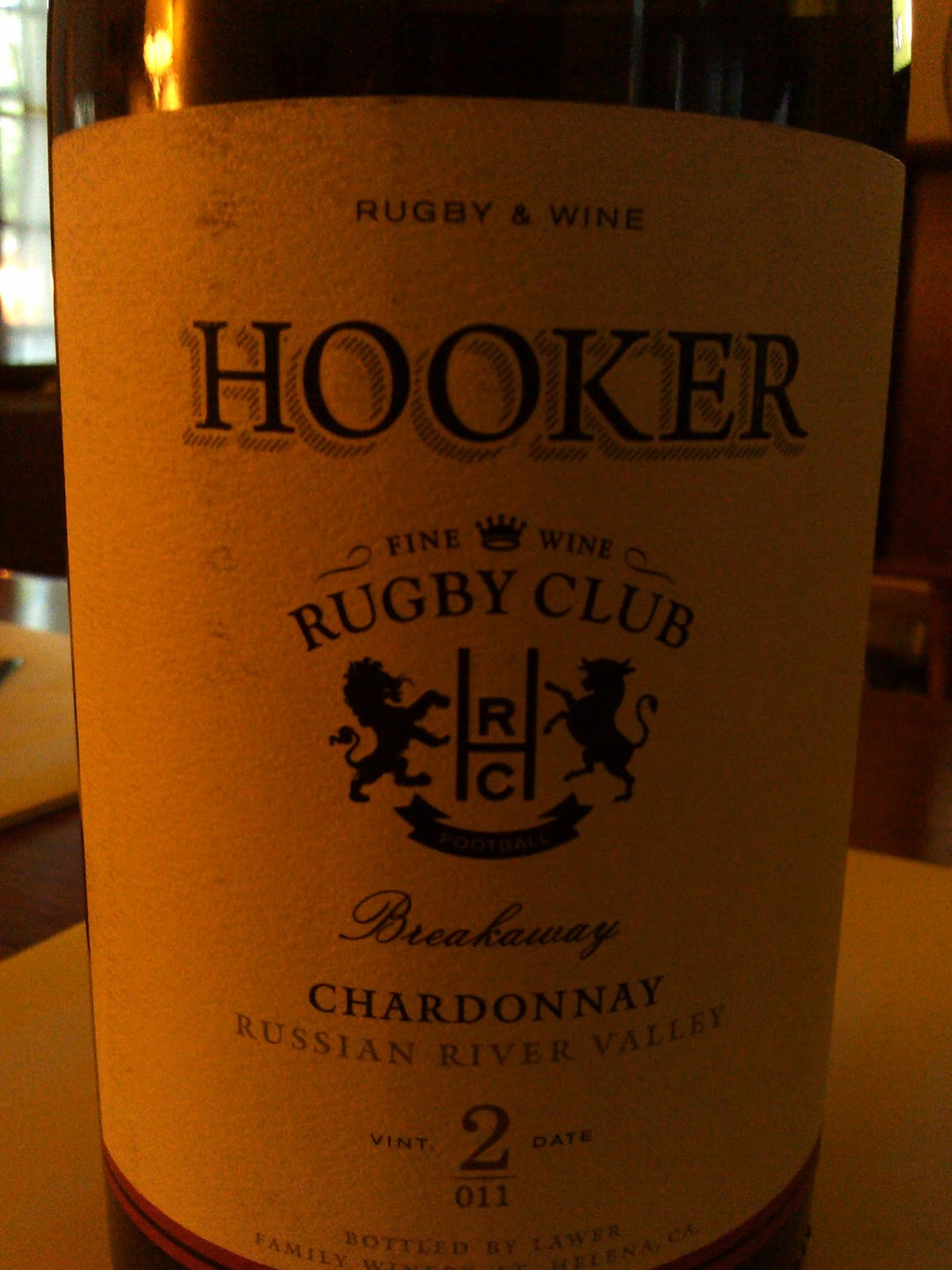
2011 Hooker Rugby Club Chardonnay “Breakaway”  -California, Sonoma County, Russian River Valley
SRP: $24
The nose is packed with papaya and honey, but also a lot of minerals. The palate shows lots of acid to start, with lemon-lime, green apple and white peach fruit. There’s also some clover honey and toasted nuts for richness, but this is a leaner, subtle oak kind of Chardonnay. Long, crisp finish that’s packed with minerals. I mean, this wine with oysters? C’mon. After tasting and getting excited about this wine, I was thrilled unveil a Russian River Chard for $24. (90 points)

2011 Jordan Vineyard & Winery Chardonnay Russian River Valley - California, Sonoma County, Russian River Valley
SRP: $30
Fresh on the nose, with floral and lemon tones. Also some creamy pear and honeycomb. On the palate, a lush mouthfeel mixes with crisp acid and a distinct mineral edge. The lemon and lime flavors are zesty, but accented by complex notes of dried honey, hazelnut and spice — tarragon or something? The creaminess is limited, with only 30% of the wine undergoing maloactic fermentation. While this wine shows some rich pear and nutty aspects from the oak aging, it maintains an elegant posture. (89 points)

2011 Gundlach Bundschu Chardonnay Estate Vineyard - California, Sonoma County, Sonoma Coast
SRP: $27
I’ve never been to the factory that makes those Lemonhead candies, but I imagine it smells something like this wine. I get that tangy lemon and sugar cane, plus there’s some floral and limestone aromas. The palate is airy and citrus-focused, with lemon and lime and tangerine. Some plushness to the mouthfeel, but with no maloactic fermentation, this wine is more about verve and briskness. Only the slightest touch of hazelnut and toast. There’s also a fresh sense of minerality that makes me crave oysters. A sleek and elegant Sonoma Coast Chard. (90 points)

SRP: $40
On the nose, pineapple and mango meet toasted marshmallow and hazelnut. This Chardonnay is plump and rich on the palate. Mango, lemon and honey flavors are topped with roasted nuts and caramel corn. Charged, strong and bold, but the medium acid is appreciated. Aged 14 months in 86% new French oak, this is obviously an oaky wine, but it shows a bit more nuance than a lot of wines made in this style. (87 points)

The 2011s are available now, so if you’re a fan of crisp, clean Chardonnays, you’ve got quite a lot of options. If you’re interested in straight-up scores without context, here’s a free alphabetical listing of Wine Spectator’s recent scores for California Chardonnay, including many from the 2011 vintage.

This post first appeared on the daily wine blog Terroirist.

Monday, July 29, 2013

Mas La Plana: Six Vintages of a Storied Spanish Cabernet

Miguel Torres Maczassek is a focused man, sniffing and sipping his wine like a scientist at work. Now CEO of the Torres Group, Miguel gives the impression that he would’ve excelled in pretty much any profession. (Indeed, he did well for himself in the perfume business before becoming marketing director for Torres). But Miguel is truly in his element as he discusses his family’s top wine, Mas La Plana. 

Mas La Plana and delicious small plates from Jaleo... what a pairing!
I recently had the pleasure of tasting six vintages of Mas La Plana with Miguel and some others at Jaleo restaurant in Washington, DC. We tasted the 1977, 1983, 1996, 2003, 2007 and 2009 vintages. We then moved on to a variety of delicious small plates, continuing to sip and discuss the six different wines.

A single estate 100% Cabernet Sauvignon from the Penedès appellation of eastern Spain, the Torres family has been producing this wine since 1970. In 1966, at a time when Spanish Cabernet was practically unheard of, Miguel’s father planted Cabernet vines in the gravel and limestone soils of Mas La Plana. At a Paris Wine Olympiad blind tasting in 1979 this inaugural vintage of Mas La Plana bested some of Bordeaux’s biggest names. Torres had its foot in the door of world-class Cabernet.

The Torres family has been making wine in Penedès for almost 150 years. If you’ve ever been in a liquor store, you recognize their Sangre de Toro wines, complete with a little plastic bull adorned to the neck. While large-scale Catalunya blends may have been Torres’ bread and butter for decades, Mas La Plana is a whole different deal.

As evidenced by this tasting, Mas La Plana has evolved quite a bit over the decades, following a common storyline of creeping alcohol content and increased time in new French oak. Miguel admits Mas La Plana has taken on a more polished and approachable style over the years, achieved by longer skin contact and more new oak. While I was smitten with the elegance and bright acidity of the older vintages, I found a lot to love in the more recent vintages, all of which maintain pure fruit and the earthy essence of their region.

My notes are below the fold…

Sunday, July 28, 2013

Chilean Wines: Good Stuff for $15 or Less

When you hear the phrase “Chilean wine,” what words come to mind? Carménère? Don Melchor? For me, Chilean wine is synonymous with value. Chilean wines frequently have a high quality-to-price-ratio, and the level of diversity is impressive.
 
I recently tasted through a few Chilean wines and found a few more reasons why I associate Chile with value-driven wines. I didn’t realize it at the time — I was tasting blind — but all of the bottles in this group generally retail for $15 or less, making them good choices for summertime sipping or parties.
 
A quick note on the “Gran Reserva” designation that appears on several of these wines. While Old World reserve designations indicate the wine was aged for a certain number of years, the requirements for Gran Reserva designation in Chile are less strict. The designation simply means the wine must have at least 12.5% alcohol and receive at least some oak treatment.
 
All these wines were received as trade samples and tasted blind.
 
Whites

SRP: $15
Very light straw-yellow color. Ripe and fresh on the nose, with pineapple and mango backed up by a note of green pepper and rosemary. On the palate, the oily mouthfeel is matched by medium acid. The fruit is ripe but also a bit pungent, like tangerine rind and the outer parts of a pineapple. The fruit flavors work well with notes of sweet honeysuckle, green pepper and sage. Bright and tangy on the finish. I don’t think I’ve ever tasted a Chilean Gewürz, but this is solid stuff. (87 points)

SRP: $12
Light and clear yellow color. Smells really fresh, green apples, green melon, honeysuckle, but there’s also a distinct herbal note that reminds me of jalapeno and chives. Tart acid kicks off the palate, followed up by crisp green apple and pear skin flavors. That jalapeno and chive note mixes in with the fruit. It’s actually quite light in its approach, perhaps a little mild. The acid lingers with lemon zest on the finish. (85 points)

SRP: $13
Aromas of melon, green pear, honey and a note that reminds me of almond butter. Plump and ripe on the palate. The yellow apple and pear flavors mix with butter, honey, melon rind and almond. Creamy, but not overblown. This chardonnay doesn’t see any oak, and it’s blended with a “dash” of Moscatel. (84 points)

2011 Viu Manent Chardonnay Gran Reserva - Chile, Casablanca Valley
SRP: $11
A burst of lemon and kiwi on the nose, there’s also a nutty-rich note, something like honey and hazelnut. Generously textured on the palate, with yellow apple and nectarine fruit that is ripe and plush. Hazelnut and toasted almond accents, a bit of cinnamon baking spice, but the acid offers crispness. Green apple, nutty and toffee notes last onto the finish, reminds me of a candy apple. Solid stuff, especially considering the price. (87 points)

2012 Tabalí Viognier Reserva - Chile, Limarí Valley
SRP: $14
The nose is a citrus explosion: grapefruit, lemon, lime and tangerine, along with a white flower and sea salt note. Creamy on the palate, but the acid zips. The tangerine, apricot and papaya fruit is ripe but tangy. A sense of ocean spray and honey mix together in this wine, and I’m really enjoying it. Ripe but lean, and packed with flavor. If you dislike some of the hot and rich Viogniers, this brisk, stainless steel-fermented wine could be a great summer sipper. (88 points)

Reds
2011 Cultivate “Copa Cobana” - Chile, Central Valley
SRP: $13
Rich and smoky on the nose, the sweet mixed berry aromas blend well with the earth and charcoal. On the palate, this is a silky, juicy, easy-drinking red. The berry flavors are ripe and tangy, mixed with red licorice candy and some earthy, smoky, sage-like notes. I like the acid and the light tannins. This blend of 70% Cabernet Sauvignon and 30% Carmenere is a perfect summer grilling red, especially at $13. (87 points)

SRP: $15
Clear ruby colored. Pretty aromas of cherries and raspberries, mixed with notes of rhubarb and sweet roses. Juicy cherry fruit leads the palate, with tangy acid and easy-drinking tannins. A bit lighter fresher in its approach, this Pinot Noir also shows some earth and mushroom notes, as well as some cola and cinnamon. Medium-length finish. The elements line up really well. Good stuff for the price. (88 points)