Friday, October 18, 2019

Wine Reviews: Autumnal Selections

Where I live, in the U.S. Mid-Atlantic, it’s finally starting to feel like autumn, my favorite season. After a hot, humid summer, I’m excited for autumnal weather, food, and wines. 

The fall samples have been rolling in these past few weeks, and I’ve curated a selection of wines that would pair well with warm harvest meals, cool nights, and all that watching leaves change kinda stuff. 

There’s a nice Mosel Riesling in this report, which I always enjoy around this time of year. Oregon offers up two delicious wines: a Vermentino from biodynamic Applegate Valley producer Troon, who seems to continually ace this variety; and a Brut Rosé from Gran Moraine, whose Pinots and Chardonnays I’ve enjoyed many times.

 Chianti Ruffina’s Fattoria Selvapiana (which has been in the same family’s hands since the 1880s) delivers some serious value Sangiovese in this report. These wines show wide appeal, and I could see them fitting well on any big family table. And a zesty, savory Schiava from the Dolomites deserves attention for its food- and budget-friendly vibes.

Lastly, Gonzalez Byass, the large Sherry house, comes through with a few wines that should warm you up as winter approaches. 

These wines were received as trade samples and tasted sighted.  

Germany


2018 Weingut Nik Weis/St. Urbans-Hof Bockstein Riesling Kabinett - Germany, Mosel Saar Ruwer
SRP: $26
Rich gold color. Big and tropical on the nose with apricot, white peach and lime, topped in fresh white and yellow flowers, mint, new tennis balls, and crushed rock notes. Medium-bodied, moderate sweetness balances off tingling acidity for a well-balanced Riesling. Peaches and papaya, drizzled in lime, topped in yellow flowers and honeycomb. There’s a lively streak of mountain stream and mineral that underlines the wine. Delicious, quite complex, this should age nicely over the next five years. (88 points) 

Italy


2018 Alois Lageder Vernatsch-Schiava - Italy, Trentino-Alto Adige, Vigneti delle Dolomiti
SRP: $16
Pale ruby color. Bright, spicy and floral nose, showing rose petals, tobacco, rhubarb and paprika on top of red cherries and pomegranate. Crisp and bright and light on the palate, but not lacking in flavor or complexity at all. Dusty tannins back up tangy cherry and pomegranate fruit, and I get complex notes of spiced cranberry sauce, rose petals, rhubarb, with earthy, soy notes. Underling mineral and chalk elements. If you’re in the mood for something lighter, floral and spicy from Alto Adige and don’t like spending money, this is a serious contender. 11% alcohol, aged six months in concrete. Made from the Schiava (or Vernatsch) grape. (89 points) 


2016 Fattoria Selvapiana Chianti Rùfina - Italy, Tuscany, Chianti, Chianti Rùfina
SRP: $19
Deep ruby color. Spicy nose, with lots of tobacco, eucalyptus, mint, pepper and leather on top of tangy currants, dark plums, with some cocoa, too. Medium-bodied with velvety tannins and medium acidity. Crunch red cherries and plums mix with flavors of smoky tobacco, grilled herbs, violets and scorched earth. This is fresh, lively and accessible but also quite complex, and offers a lot in this price range. Drink in the near term. 95% Sangiovese with a combined 5% Canaiolo, colorino and Malvasia Nera. (88 points) 


2014 Fattoria Selvapiana Pomino Villa Petrognano - Italy, Tuscany, Pomino
SRP: $21
Deep ruby color. Juicy aromas of red cherries and currants mix with violets, graphite, wild herbs, tomato leaf and tobacco. Nice grip, this is full-bodied but not too heavy, and shows surprisingly vibrant acidity. Lots of smoky, charcoal, graphite and mineral tones underline the beautiful red and black fruit. Violets, clove, earth, wild herbs and cocoa powder and cedar, this has a lot going on. Needs a few years of cellar time or good decant if you’re drinking it soon, but this has a lot to show for its price point. 60% Sangiovese with 20% Cabernet Sauvignon and 20% Merlot, aged 29 months in French oak. (90 points) 


2015 Fattoria Selvapiana Chianti Rùfina Riserva - Italy, Tuscany, Chianti, Chianti Rùfina
SRP: $36
Medium ruby color. Nose shows vibrant cherries and raspberries, along with rose petals, mint, spicy oregano and paprika elements. Full-bodied, solid tannic grip, but moderating acidity. Currants and black cherries (the fruit is rich and round but shows nuance). I get black olive, clove, mint, tobacco and charcoal accents, along with some coffee and wood notes woven in well. Lovely, concentrated yet vibrant, this needs at least a few years in the cellar. 100% Sangiovese aged 32 months in French oak. (90 points) 

Spain


N.V. Gonzalez-Byass Sherry Tio Pepe Fino 'En Rama' 2019 - Spain, Andalucía, Jerez-Xérès-Sherry
SRP: $20
Lemon peel color. Classic aromas of sea salt, green olive, ocean spray, on top of lemon peel, apricot, shaved ginger, hay and honeycomb. The palate is full but so crisp and zesty, with deep texture and vibrant acidity. Lemon and orange peel mix with complex nuances of sea salt, oyster brine, crushed shells and chalk, ginger, green olive, spiced tea. Lovely depth and complexity, this begs for all sorts of delicious foods but I was craving grilled oysters specifically while tasting this. Great value. (90 points) 


N.V. Gonzalez-Byass Sherry Amontillado Viña AB - Spain, Andalucía, Jerez-Xérès-Sherry
SRP: $25
Deep gold color. Aromas of sea salt, almond, hay and ginger, on top of candied orange peel, apricot marmalade, lemon zesty. Crisp acidity, round, deep texture, waxy yet lively feel. The wine integrated and balanced very well. Orange peel, apricot, mixed with ginger, almond, hay, candlewax, white tea. Lush, harmonious, a solid Amontillado that offers a lot for the price. 16.5% alcohol, <4 grams of residual sugar, aged 12 years in oak casks. (90 points)


N.V. Gonzalez-Byass Pedro Ximénez Sherry Noé 30 Years - Spain, Andalucía, Jerez-Xérès-Sherry
SRP: $50/375ml
Deep brown color. Nose of sweet dates, roasted figs, caramel, lush and rich with cocoa, violets, clove and marmalade notes. Full-bodied, plush, sweet and unctuous with medium acidity. Plum cake, roasted figs, sweet dates, glazed, goopy fruit, mixed with flavors of bitter chocolate, clove, cedar and roasted chestnuts. Rich, deep, delicious stuff, the acidity really helps keep this densely sweet wine vibrant. 100% Pedro Ximenez, aged 30 years in solera. (91 points) 

United States


2018 Troon Vineyard Vermentino - USA, Oregon, Southern Oregon, Applegate Valley
SRP: $25
Light yellow color. Aromatically, this is pretty as all heck, with lots of white and yellow flowers, white tea, sea salt, raw almond, on top of lemon and apricot. Wide breadth of texture, so pretty, with a waxy, creamy, yet zippy feel. Pure and deep but vibrant with crisp acidity, and delicious lemon, apricot and peach fruit. Notes of mint, herbal tea, crushed chalk, white flowers, minerals and quinine add all sorts of complexity. Troon has been killing it with Vermentino for a while now, and this is another example of their mastery of the grape. Not to mention the crazy value here. Fermented and aged in old French oak, with maloactic fermentation. (92 points)


N.V. Gran Moraine Pinot Noir Brut Rosé - USA, Oregon, Willamette Valley, Yamhill-Carlton
SRP: $55
Pale copper color. Complex but airy on the nose, with white cherry, strawberry, grapefruit, topped in wildflowers, hay, honey, with salty, oyster shell notes. Nervy and crisp on the palate with fine bubbles – dry, brisk, salty, bright appeal. Strawberry, white cherry and red apple peel, mixed with chalk, saline but plenty of doughy, honey, almond notes, too. Delicious, complex, bright stuff. Chardonnay with 43% Pinot Noir, fermented in a mix of old French oak and stainless steel, aged 24 months on the lees. (92 points)


This post first appeared on the daily wine blog Terroirist.

Saturday, October 5, 2019

New California Releases: Chardonnay, Pinot Noir & Syrah

It’s finally fall, and the samples from California have been rolling in. This week, I’m focusing on some newly-releases Chardonnays, Pinot Noirs and Syrahs.
 
I’ve really enjoyed FEL’s take on classic Mendocino Chardonnay and Pinot Noir, and their 2017s from the Savoy Vineyard are really something. They ride a clean line between being really pretty and expressive, but also and age-worthy as well. 

Gary Farrell is well-known for producing Sonoma Pinot and Chard, and they offer a wide portfolio of wines. They offer solid value options but also more complex, single-vineyard wines, which, given their quality, are very reasonably priced. 

Ramey and Sosie really deliver with some Sonoma Syrahs that would rock with some time in the cellar. 

And a few other fun, value-driven wines round out this week’s report. These wines were received as trade samples and tasted sighted. 


N.V. J Vineyards & Winery Cuvée 20 - California, Sonoma County, Russian River Valley
SRP: $38/750ml
Pale gold color. Nice mix of biscuits and pie crust aromas, along with tangerine, pears and some salty, sea breeze notes. Crisp acidity frames the wine nicely, balancing the slight sugar. Pie crust, toasted bread and chalky, perfumed notes accent the tart apples and juicy orange fruit. Crowd-pleasing, pleasant, friendly stuff. 50% Chardonnay, 49% Pinot Noir, 1% Pinot Meunier, 12.5% alcohol, 1.4% residual sugar. Tasted from magnum. (88 points) 


2018 Harken Chardonnay Barrel-Fermented - California
SRP: $15
Deep gold color. Juicy yellow apples, glazed pear and honey butter on the nose, with some floral and toasted nuts. Medium+ bodied, a plush and creamy texture, but moderate acidity keeps it lively. Flavors of orange marmalade, yellow apples and pears, topped in notes of cinnamon, nougat, honey, floral perfume. This sports a lot of fun and flavor, and it also has quite a bit of personality for a California Chardonnay at this price point. All barrel-fermented in American and French oak, 100% maloactic fermentation. (86 points) 


2017 Gary Farrell Chardonnay Russian River Selection - California, Sonoma County, Russian River Valley
SRP: $35
Deep yellow color. Juicy and tropical aromas, peaches, pineapple, honey, almond butter and yellow flowers. Medium+ bodied with a juicy, creamy texture but vibrant acidity. Yellow apples, pineapple and mango slices, mixed with nuanced notes of honey, salted nuts, minerals and ginger. Delicious and yummy, but it shows a lot of balance and nuance for a Russian River Chardonnay at this price point. Aged nine months in 35% new French oak, 13.7% alcohol. (88 points) 


2016 Gary Farrell Chardonnay Olivet Lane Vineyard - California, Sonoma County, Russian River Valley
SRP: $45
Light gold year. Enticing aromas of pears, peach, yellow apples, with complex sea salt, peanut shell, hay and honeycomb. Crisp acidity frames the wine well on the palate, and there’s a pleasantly plump and juicy texture. Medium+ bodied and vibrant with creamy pear, lemon meringue and yellow apple. Notes of minerals, chalk, sea salt, and nuanced elements of almond and vanilla. Complex and harmonious, this opens up nicely and could benefit from a bit of age as well. Aged nine months in 35% new French oak, 13.4% alcohol. (91 points) 


2017 FEL Chardonnay Savoy Vineyard ­- California, North Coast, Anderson Valley
SRP: $48
Rich yellow color. The aromas boast salted almond, hazelnut, ginger and whipped honey on top of lemon curd and orange marmalade. So pretty and vibrant on the palate, the acidity leaves me salivating but there’s plenty of depth and fruit as well (lemon curd, apricot, kiwi, yellow apple). I get complex notes of whipped honey, graham cracker and peanut brittle, but also more delicate notes of crushed shells, sea salt and shaved ginger. Lovely, complex, full of flavor but really nervy and fresh with a mineral-driven finish. Very pretty stuff that should do well with a few years in the cellar. Barrel-fermented in 55% new French oak, aged 18 months. (92 points) 


2017 Cherry Pie (Hundred Acre) Pinot Noir - California
SRP: $23
Medium ruby color. Sweet nose of cherry pie filling — and that’s not my reaction based on the name, it legit smells like cherry pie — along with raspberry jam, rhubarb and vanilla. Juicy and fun on the palate, this has a playful, smooth, easy-drinking appeal with medium/low acidity and light tannins. Not as candied and gloppy as I was expecting, this shows plump, sweet red fruits mixed with some spiced cranberry sauce, pepper, clove. Light-hearted fun. A blend of fruit from Monterey, Santa Barbara and Napa counties. (85 points) 


2017 FEL Pinot Noir Savoy Vineyard - California, North Coast, Anderson Valley
SRP: $70
Deep ruby color. A rush of fresh red fruits on the nose (strawberries, cherries, cranberry and pomegranate), along with mint, menthol, tobacco, rose petal and white pepper notes – beautiful aromas. Juicy and full on the palate but vibrant, bright acidity frames the wine well against a backdrop of structured, round-edged tannins. Black cherry, raspberry, spiced cranberry sauce, the fruit mixes with lots of earthy, minty, leafy, floral complexities. Complex and could age well for at least three to five years, but it remains fresh and so fun to drink. A ripping good Anderson Valley Pinot. (93 pints) 

 
2016 Gary Farrell Pinot Noir Hallberg Vineyard - California, Sonoma County, Russian River Valley
SRP: $55
Deep ruby color. Inviting nose of violets, rhubarb and roses on top of strawberries, raspberries and cola. On the palate, crisp acidity frames the wine nicely, this has a fresh and lively style with dusty tannins. Juicy strawberries, raspberries, spiced cranberry relish, and I get complex notes of clove, rhubarb, pepper and mint. Notes of earth and nuanced cedar and coffee round out the finish. Fresh, lively, but juicy and complex, this is lovely now but has the stuffing to improve for at least a few years. Aged 15 months in 40% new French oak. (91 points) 


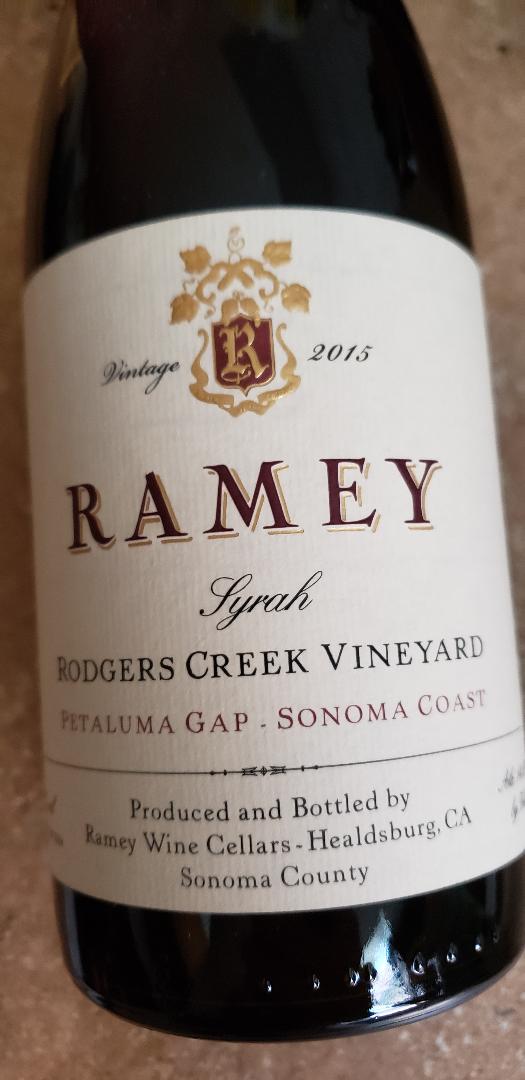
2015 Ramey Syrah Rodgers Creek Vineyard - California, Sonoma County, Petaluma Gap
SRP: $65
Light purple. Aromas of tangy strawberries, juicy raspberries, and a spiced cranberry sauce note, along with black pepper, leather, cocoa and mint – gorgeous aromas. Velvety but structured tannins, and vibrant acidity, this Syrah has a tangy, juicy, balanced feel. A nice mix of crunchy red and saucier black fruit, all fresh and lively. Complex notes of violets, leather, pepper, nuanced notes of coffee and vanilla bean. I’d love to see what this does in five years. Native yeast fermentation, this exquisite Syrah was co-fermented with 8% Viognier, aged 25 months in 93% new French oak. (93 points) 


2016 Sosie Syrah Vivio Vineyard - California, Sonoma County, Bennett Valley
SRP: $38

Deep purple color. Smoky nose with beefy, meaty, leathery, mesquite notes on top of saucy black cherries and blueberries. Full but fresh on the palate with solid tannic grip, but rounded edges and vibrant, moderating acidity. Tangy black cherries and plums balances well with a lot of interesting flavors: mesquite, menthol, brisket, leather, violets, incense. Complex but straight-up delicious, too. This evolves nicely with air but would benefit rom a few years. When sniffing and sipping, this is one of those Syrahs I can just tell comes from a special place. Co-fermented with 7% Roussanne, aged 20 months in 50% new oak. (92 points)

This post first appeared on the daily wine blog Terroirist.

Wednesday, October 2, 2019

Digging into Some Complex Cognacs

Honestly, spirits aren’t really my wheelhouse. I’m a simple, wine-loving dude who rarely consumes spirits or cocktails. But, if I’m going to put some 40% ABV liquid into my gut, it’s likely going to be an Islay Scotch or a good Cognac. So, I’m taking a break from wine this week to focus on this historic spirit.

Cognac seems well-known to wine-loving crowds. North of Bordeaux, in the chalky soils near the Charente River, thousands of growers farm Ugni Blanc grapes to make Cocnac. Spreading out from the village of Cognac, there are six different crus: Grande Champagne, Petite Champagne, Borderies, Fins Bois, Bons Bois, and Bois Ordinaires. “Fine Champagne” refers to a blend composed of at least 50% Grande Champagne, with some Petite Champagne.

Most Cognac is made from the Ugni Blanc grape (known as Trebbiano in Italy), but Folle Blanche (which dominated the pre-phylloxera period) and Colombard are also found. The grapes are usually harvested in September, and then they undergo some fermentation, resulting in a high-acid white wine with about 9% alcohol. Then, Cognac producers begin a double distillation process in unique Charentais copper pot stills.

This spirit (eau de vie) is then aged for at least two years before it can be called Cognac. Aging is always done in oak casks, and many producers have their own cooperage system. The period of aging is indicated by a series of letters on the label. V.S. indicates with the youngest spirit in the is at least two years old. V.S.O.P. requires at least four years of aging. And, as of 2018, X.O. now means the youngest spirit in the bend is at least 10 years old.

Over the summer, I dove into some different Cognacs for review, and my notes are below.

These spirits were received as trade samples and tasted single-blind.


N.V. Frapin Cognac Grande Champagne V.S. — France, Cognac, Grande Champagne Cognac
SRP: $55
This has an airy, floral quality, with pear and orange blossom, some orange peel, but also caramel, honeyed tea and ginger snaps. Vibrant on the palate, smooth texture, a mix of baked pears and apples with cinnamon, floral potpourri, with honeycomb and spiced tea. Fresh, lighter style, but solid complexity for a VS. This estate has existed since 1270, and sources grapes from more than 1,200 acres of vineyards in Grande Champagne. (90 points)


N.V. Bache-Gabrielsen Cognac 3 Kors V.S. — France, Cognac
SRP: $32
A lively nose of apricot, yellow raisin, honey and white flowers. Smooth and fresh with apricots and apples, in has a lively, floral quality to it, blossoms, pineapple, dried ginger, and warm, honeyed tea. Smooth, fruity, floral and fresh. This estate was founded by a Norwegian Lieutenant in 1905, and the spirit is sourced from grapes in Fins Bois, Petite Champagne and Grande Champagne. (88 points)


N.V. Merlet Cognac V.S.O.P. — France, Cognac
SRP: $50
Nose is warm and inviting with quince paste, orange peel, honey, clover, ginger and graham notes. Plush texture, vibrant, with layers of fruit and nut flavors (candied orange peel, fig paste, dried apricot), and clove, honey and sweet caramel add complexity. Nicely balanced, no harsh edges at all, lots of warm, inviting but spicy elements. From vineyards in the crus of Borderies and Fins Bois. (90 points)


N.V. A.E. Dor Cognac Rare Fine Champagne V.S.O.P. — France, Cognac, Fine Champagne Cognac
SRP: $60
Aromas of warm caramel, yellow raisins, candied orange peel, with ginger, graham cracker and subtle smoky traces. Smooth and velvety on the palate, well-rounded and balanced. Flavors of yellow raisins, plum cake and candied orange peel mix well with vanilla, clove, coffee and smoky elements. Complex, elegant, smooth, lovely stuff. Sourced from Grande Champagne and Petit Champagne. (92 points)


N.V. Prunier Grande Fine Champagne Cognac Family Reserve X.O. — France, Cognac, Grande Fine Champagne Cognac
SRP: $70
Inviting nose of honey, sweet marmalade, along with ginger, clove and sweet coconut. Lush palate with a smooth texture, and flavors of sweet apricot, yellow plums, orange marmalade, honeycomb, along with waxy, clove and caramel tones. The mouthfeel is lovely and the balance is pristine. A blend of 15- to 35-year-old Cognacs from Grande Champagne. (92 points)


This post first appeared on the daily wine blog Terroirist.
Tuesday, September 24, 2019

Finding Quality & Value in Sainte-Foy and Francs Côtes de Bordeaux


During a week-long trip to the Côtes de Bordeaux regions in July, I had the chance to meet winemakers from two of the smallest of the five appellations, Francs and Sainte-Foy.

Francs is home to about 40 winemakers, while Sainte-Foy only about 20. As I tend to find in smaller, lesser-heralded regions, the winemakers I met here seemed to have a cooperative spirit, an ethos that a rising tide of attention on the region's wines will lift all boats.

Most of the Côtes de Bordeaux wines are made in small quantities and sold within France itself. The value of these wines has been evident to me for years, and the wines feature prominently in shops and bistros throughout Bordeaux. Of the export market, China leads the way, followed by Belgium, while the United States comes in third.

The vineyards in Francs are spread among the rolling hills on the northern banks of the Dordogne River. Lots of limestone soils here fit the Merlot grape well, but Cabernet Sauvignon makes up 25% of red grapes, followed by Cabernet Franc. Semillon leads the pack of white grapes here.

Sainte-Foy is the smallest and newest of the Côtes de Bordeaux appellations, joining the union in 2016. East of the city of Bordeaux, along the Gironde River and near the mouth of the Dordogne River, the clay and limestone soils here support vibrant Merlots, along with a good amount of Cabernet Sauvignon. The vineyards are spread among the communes outside of the town of Sainte-Foy, and the average estate is about 20 acres.

During a lovely lunch at Chateau La Peyronie, located in the Francs Côtes de Bordeaux appellation, I had the chance to taste through a bunch of Sainte-Foy and Francs wines. Unfortunately, only a few of these wines seem to be available in the U.S. The price points (when available) are based on Wine-Searcher averages.

I'm hoping that I see more and more of these wines on U.S. shelves. The high quality, relatively low price points, and early-drinking appeal of many of these wines make them quite attractive.

My notes on the wines I tasted are listed below.


2018 Château Martet Blanc - France, Bordeaux, Entre-Deux-Mers, Sainte Foy Côtes de Bordeaux

$12
Aromas of apricot, orange, with lemongrass and white pepper. Very bright on the palate, but bountiful tropical fruit (grapefruit, peach, pineapple), with mineral, floral and chalky tones. Plush texture but fresh, very good stuff. Semillon with Sauvignon Gris, Sauvignon Blanc and Muscadelle. (89 points)

2018 Château Puyanché Blanc - France, Bordeaux, Libournais, Francs Côtes de Bordeaux
$10
Creamy and inviting on the nose, apples, pears, honey. On the palate, this barrel-fermented wine stands out, but it’s also quite nuanced and vibrant. Creamy, plush and leesy, but there’s a talc, mineral and chalk essence that I really like. Eye-opening stuff for me. 75% Sauvignon Blanc and 25% Semillon, started in stainless steel and aged seven months in barrel with lees stirring. Insane value here. (91 points)

2016 Château Franc Cardinal - France, Bordeaux, Libournais, Francs Côtes de Bordeaux
$14
Nose shows strawberries, cherries, roses, sweet smelling herbs. Smooth on the palate, light tannins, medium+ acid. Raspberry and strawberry-driven with earth, cola, coffee tones. Light and fresh fun style. Merlot with 24% Cabernet Franc and 4% Malbec aged eight months in French oak. (87 points) 

2016 Château Galouchey - France, Bordeaux, Entre-Deux-Mers, Sainte Foy Côtes de Bordeaux
Fresh strawberries and cherries on the nose. Light tannins, fresh acidity, juicy and fruity but easy-drinking with subtle earth and leather notes. Fun, simple, in a good way. Merlot, Cabernet Franc and Cabernet Sauvignon, aged 12 months in French oak. (86 points)


2016 Château Coutelor La Romarine - France, Bordeaux, Entre-Deux-Mers, Sainte Foy Côtes de Bordeaux
Dark currants on the nose with bell pepper and roasted herbs. Bold tannins with fresh acidity, dark and crunchy currant fruit. Nuanced earth, coffee, pepper. Cabernet Sauvignon with 5% Merlot. (88 points)


2016 Château Laulan - France, Bordeaux, Libournais, Francs Côtes de Bordeaux
Cherry compote on the nose. Plush yet shows moderate tannins, with cranberry, strawberry, pepper and spice. Merlot, Cabernet Franc, Cabernet Sauvignon and Malbec aged 12 months in oak. (87 points)


2015 Château Godard Bellevue - France, Bordeaux, Libournais, Francs Côtes de Bordeaux
$20
Sweet and rich and saucy on the nose. All sorts of jammy fruits, plush texture and light tannins, low acidity. Jammy, forward style. Merlot, Cabernet Franc and Cabernet Sauvignon aged 12 months in oak. (84 points)

2015 Château Le Prévot - France, Bordeaux, Libournais, Francs Côtes de Bordeaux
Juicy and dark aromas with sweet coffee, black pepper glaze. Rich and fruity with moderate tannins, fresh acidity, and tart currant fruit. Coffee, cocoa, pepper tones. Merlot with 10% apiece of Cabernet Franc and Cabernet Sauvignon. (87 points)

2015 L'Eden de Lapeyronie J. F. Lapeyronie - France, Bordeaux, Libournais, Francs Côtes de Bordeaux
$28
Plummy, cherries, earth on the nose. Full and velvety on the palate with suave tannins and fresh acidity. Currants and plums mixd with cocoa, pepper and cedar. Well done. 50% Merlot, 40% Cabernet Sauvignon, 10% Cabernet Franc aged in 30% new oak. (88 points)


2014 Château de Francs Les Cerisiers - France, Bordeaux, Libournais, Francs Côtes de Bordeaux
$15
Nose shows saucy red and black currants, cocoa, scorched earth. Plush feel, velvety tannins, this is a juicy, sweet plum-dominated wine with some interesting anise and roasted coffee tones. 90% Merlot, 10% Cabernet Sauvignon. (87 points)

2012 Château Moulin de Gueyraude - France, Bordeaux, Libournais, Francs Côtes de Bordeaux
Smells of plum cake, prunes and sweet black licorice candies. Tannins are smooth, medium acidity, with plums and prune fruit. Notes of coffee and black tea. Merlot with 10% apiece Cab Franc and Cab Sauv. (85 points)


2016 Château Lapeyronie - France, Bordeaux, Libournais, Castillon Côtes de Bordeaux
Sweet plums on the nose with roasted figs, cocoa and earth. Quite refined and fresh with juicy cherries and figs. Lovely acidity and freshness. Really vibrant, crisp, floral, but plenty of red fruits. (90 points)


2016 Château Tour de Goupin - France, Bordeaux, Entre-Deux-Mers, Sainte Foy Côtes de Bordeaux Liquoreux
Sweet honey and tennis balls on the nose. The palate is rich and unctuous, showing medium-low acidity, and flavors of apricot, orange marmalade. Sweet but seems a bit thin the same time? All Semillon from 50-year-old vines in clay and limestone soils. (85 points)

Tuesday, September 17, 2019

Adapting to a new climate reality in the Côtes de Bordeaux

Merlot vines at Chateau La Peyruche.
I was gearing up for a day of touring vineyards and tasting dry red wines in Blaye Côtes de Bordeaux, yet I felt anxious. The temperature reached 104 Farenheit the day I arrived, and I had been reading about the record-breaking high temperatures across Western and Northern Europe. Prone to heat exhaustion and missing my air conditioner at home, I hydrated feverishly, soaked my cooling towel and hung it around my neck, as I headed out for the day. It reached 108 degrees that July afternoon.

The intense heat wave passed halfway through the trip, as rain fell on these vineyards for the first time in more than a month. And while this was one for the books, bouts of extreme heat are becoming more commonplace.

Known for its iconic sense of history and tradition, Bordeaux winegrowers and vintners are reassessing how they operate in light of climate change. From picking grapes earlier, to altering their blends, to considering new grape varieties altogether, winemakers are utilizing different tools to brace for the impact of a much warmer climate.

To be clear, I felt no sense of panic from anyone I spoke with about this topic. Winemakers all over the world are struggling with how to adapt to climate change (some more than others), and when it comes to farming, change is constant.

But as I talked to people in the wine industry during a week-long trip, I found a stoic acceptance that climate change will drastically alter the landscape of Bordeaux wine. Adaptations are necessary, and well underway.

Earlier this summer, the Bordeaux winemaker’s syndicate voted unanimously to amend rules for the Bordeaux and Bordeaux Supérieur appellations, allowing for seven new grape varieties to be included for wines bottled under these appellations.

France’s National Institute for Agricultural Research has been testing dozens of grape varieties for years, to determine which might fare better in the hotter, drier climate to come. Among the new grape varieties are: Touriga Nacional (renowned grape of Portugal’s Douro Valley); Arinarnoa (a cross between Cabernet Sauvignon and Tannat); and Marselan (a Cabernet Sauvignon and Grenache crossing). White grapes like Petit Manseng and Albariño will also be permitted for white blends. These grapes may soon be included in these Bordeaux wines up to a combined 10% of the blend.

The move would only affect two appellations, but Bordeaux and Bordeaux Supérieur make up about half of the wine produced in the entire region. The change still needs approval from the French government, so the process will take time. But this would be the first amendment to these appellation rules since the 1930s, and it demonstrates that Bordeaux winemakers are doing what they can to hedge their bets.

During my visit to the Côtes de Bordeaux (a group of appellations spread among the Entre-Deux-Mers and Right Banks) the shifting climate was a hot topic of discussion. All the winemakers I spoke with seemed to have a wait-and-see approach to planting these new grape varieties. While no one I spoke with voiced any objection to this move, neither was anyone chomping at the bit to plant Marselan — although one winemaker told me he had planted Albariño years earlier.

It’s too early to tell how vintners will weave these varieties into the larger quilt of Bordeaux wines. As I toured a new Cabernet Sauvignon vineyard on a scorching, sunny day, Bertrand Weisgerber (owner of Chateau La Peyruche in Cadillac) said he sees opportunity in having different options when planting or re-planting a vineyard. “It makes sense,” he said. “I think it’s a good time to try new things.”

Wine producers here have been adapting to climate change in their own ways for years and years, because they’ve been seeing the change in their vineyards first-hand. “The wine industry has been [one of the] first to face this challenge,” said Stéphane Apelbaum of Optimum Vineyard Management & Consulting. “It seems like we’re having two seasons instead of four.”

At Chateau Les Conseillans, in Cadillac Côtes de Bordeaux, I tasted some beautiful Merlot-based wines and talked about the future of the grape. Here on the Right Bank of the Garonne, the early-ripening Merlot grape has long dominated, backed up by the other major Bordeaux grapes. But Apelbaum says, as the climate changes, he sees Merlot’s dominance fading.

Stephane Apelbaum at Chateau Les Conseillans.
Thirty-five years ago, he said, Merlot was often harvested fully ripe at levels that led to an alcohol content of about 12.5%. In current vintages, he said, Merlot grapes are being harvested with potential alcohol around 15% or higher. Merlot grapes can be picked even earlier (which many winemakers are already doing), but not too early, or you end up with bitter and unbalanced wines.

This Merlot dynamic is leading some winemakers in these Right Bank regions to focus more on grapes like Cabernet Sauvignon and Malbec, which can ripen more evenly in warmer temperatures. And other, non-traditional grapes may feature more in future red Bordeaux blends. Apelbaum mentioned interest in Tempranillo as an option, given that long-term projections of Bordeaux’s climate start to resemble those of some warmer regions in southern Spain. Other winemakers I spoke with showed interest in Portuguese reds as well.

The changing climate can pose difficulties for winemakers trying to create balanced wines, said Patrick Honnef of Côtes de Castillon’s Chateau Page. But his Merlot-based reds (especially the 2016), showed that fresh, vibrant Merlots are still alive and well. “I would not say there is panic, but a lot of work to do,” Honnef said, adding that he would soon be visiting southern Spain to meet with winemakers and discuss how they’re adapting to climate change.

Even a region with such storied history and winemaking tradition, growers and winemakers will have to evolve and adapt with this new climate reality. At the same time, I found passionate winemakers who want to continue making wines that represent their house’s history, style, and terroir.

“We still have to respect the Bordeaux style,” Apelbaum said. “But we must prepare. We must face this.”

Wednesday, September 4, 2019

Wine Reviews: International Grab Bag


This week, I’m back with a catch-all report of wines I received these past few months but didn’t get around to reviewing until recently. (It’s been a busy and enjoyable summer, and I hope the same is true for you.) 

Smith-Madrone’s Spring Mountain wines are consistently some of my favorite from Napa, and I love their Chardonnay and Riesling. So, since I tasted these wines sighted, I tried to approach them with as much skepticism as possible. That said, the 2016s showed wonderfully. Crystal clear, pristine wines that are both begging for serious cellar time. And for the price, I’m still amazed these wines exist.   

C.V.N.E. comes through with some moderately-priced Riojas worth checking out. And Italy’s Garafoli provides three wines from Marche that offer some deliciousness and intrigue for the price. 

Lastly, Virginia’s Early Mountain delivers a juicy red quaffer for those late summer scorchers. 

All of these wines were received as trade samples and tasted sighted. 


2016 Garafoli Verdicchio dei Castelli di Jesi Classico Superiore “Podium” - Italy, Marche, Verdicchio dei Castelli di Jesi
SRP: $26
Light yellow color. So perfumed, with aromas of peaches, limes, dandelion, floral potpourri, sea salt. Nice breadth of texture on the palate with vibrant acidity. Oranges, yellow plums, apricot, lots of fresh fruit, with plenty of sea salt and spicy floral potpourri, along with richer elements of honey and wax. Lots going on here. A single-vineyard Verdicchio, fermented and aged in concrete and stainless steel. (90 points)  


2018 Garofoli Verdicchio dei Castelli di Jesi Classico Superiore “Macrina” - Italy, Marche, Verdicchio dei Castelli di Jesi Classico
SRP: $15
Light yellow color. So floral, with lots of honeysuckle and daisies, along with peaches, honeydew and limes. Lively and crisp on the palate with a pleasantly plump feel. Honeydew drizzled with lime, and I get these notes of chalk, minerals, punchy herbal tones as well. This is pure summer fun but also shows significant complexity, especially for the price. Aged five months in concrete and stainless steel. (88 points)  


2016 Garofoli Rosso Conero Piancarda - Italy, Marche, Rosso Conero
SRP: $17
Deep, juicy purple color. The nose boasts raspberries and black cherries with smoky menthol, wild herbs, eucalyptus and pepper. Vibrant acidity, dusty tannins, with a solid core of red and black cherry fruit. Notes of smoky, charcoal, herbs, a bit sharp and linear, but there’s enough juiciness and complexity that it works. Spicy incense notes on the finish. 100% Montepulciano aged one year in oak. (88 points)  


2016 C.V.N.E. (Compañía Vinícola del Norte de España) Rioja Cune Crianza - Spain, La Rioja Alta, Rioja
SRP: $13
Vibrant ruby color. Nose shows juicy black cherries, spiced cranberry sauce, clove, roses and tobacco. Crisp, lively and fresh on the palate with dusty tannins. The wine is ripe and juicy but stays fresh and bright. Raspberries, cherries, topped in cocoa, dusty earth, roses, clove and mint. Lots of complexity here for a wine at this price point. An attractive, inviting, drink-me-now Rioja. (88 points)  


2016 C.V.N.E. (Compañía Vinícola del Norte de España) Rioja Viña Real Crianza - Spain, La Rioja Alta, Rioja
SRP: $16
Bright ruby color. Aromas of cherries, chilled strawberries, along with sweet roses, clay/earthy tones and cocoa powder. Fresh and bright, light tannins, juicy red fruit, crisp acidity. Cherries, raspberries and pomegranate mix well with roses, rhubarb, anise and mint. Fun, juicy, balanced, accessible but complex for the price. Aged 10 months in American oak. (88 points)  


2016 Com Tu - Spain, Catalunya, Tarragona, Montsant
SRP: $55
Rich purple color. Spicy aromatics with sage, pepper, creosote and mint, along with smoky cherries, sweet cranberry sauce, with cedar, coffee and incense. Juicy and full-bodied with suave tannins and moderating acidity, not too heavy for 15%. Raspberry and strawberry jam fruit mixes well with sweet coffee, mint, eucalyptus and pepper. The complexity is quite nice, smooth and accessible, totally delicious, but showing some complex floral, spice and earth tones. Grill-friendly stuff that packs a punch. A project from Rene Barbier Ferrer of Clos Mogador. 100% Garnacha from 35- to 50-year-old vines, aged 18 months in barrel. (90 points)  


2016 Smith-Madrone Riesling - USA, California, Napa Valley, Spring Mountain District
SRP: $34
Light yellow color. Gorgeous nose of salted limes, apricot, pineapple, with dusty, chalky, sea spray notes. Laser-like focus on the palate, quite dry and vibrant. Juicy yellow and green apples with limes, and a complex mix of limestone, ocean spray, mountain stream and crushed shells. Such a lively, complex, balanced and age-worthy Riesling. Smith-Madrone does it again, and this vintage is a stunner for the cellar. 12.8% alcohol, about 0.7% residual sugar. (93 points)  


2016 Smith-Madrone Chardonnay - USA, California, Napa Valley, Spring Mountain District
SRP: $40
Light yellow color. Aromas of juicy yellow apples topped in complex notes of honey, almond, cinnamon, sea salt, hay and chalk dust. Deep texture on the palate with pretty acidity and lovely balance. Yellow apples, candied lemons, orange peel and apricot, juicy and fruity but also airy and elegant. Salty, minerals, chalky, with notes of honey, nougat and hay. Gorgeous, deep, yet vibrant. Another beautiful Chardonnay from Smith-Madrone. Barrel fermented with 80% new French oak. I’d love to age this for five years. (93 points) 


2018 Early Mountain Vineyards Soif - USA, Virginia, Central Virginia, Madison County
SRP: $26
Deep but bright ruby color. Very pretty, juicy, fresh nose of red plums, candied cherries, bubble gum, with sweet pipe tobacco. Fresh and lively on the palate, light-bodied (12.3% alcohol) with soft tannins and zippy acidity. Plums, cherries, raspberries, super juicy but it’s also showing complex nots of earth, soy, rose potpourri and clove. So fun and delicious. An interesting semi-carbonic wine, a blend of 49% Cabernet Franc, 33% Merlot, 13% Petit Verdot, 3% Chardonnay and 2% Cabernet Sauvignon. Soif means thirst in French and Early Mountain certainly made a gulpable, juicy, low tannin, crushable red in this difficult vintage. (88 points)